With increasing environmental protection demands, biochar production equipment has evolved from traditional charcoal kilns to modern industrial carbonization plants. The Biomass Carbonization Plant for Biochar Production can process various biomass wastes, such as olive pits, walnut shells, hazelnut shells, pistachio shells, straw, fruit shells, waste wood, date pits, palm kernel shells, and coconut shells. Biochar is the main product of biomass carbonization plants.
Biochar is a carbon-rich and stable solid material that can improve soil health. It also enables permanent carbon sequestration, providing a natural solution to the greenhouse effect.
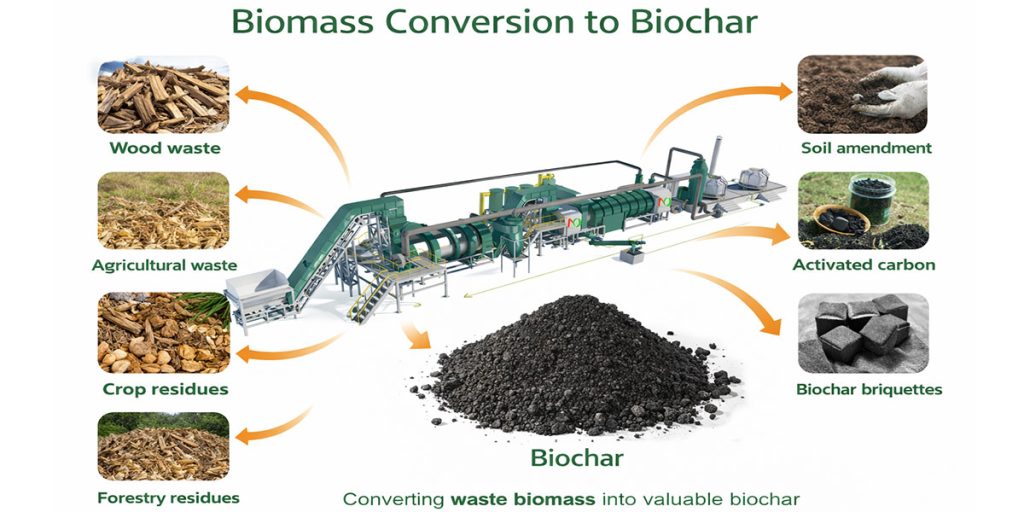
The Biomass Carbonization Plant for Biochar Production essentially converts biomass into biochar through pyrolysis. The biomass carbonization process involves heating biomass under anaerobic or anoxic conditions, causing the thermochemical decomposition of its complex organic matter. This ultimately produces solid biochar, liquid bio-oil, and syngas.
This is similar to the principle of charcoal combustion. However, modern industrial carbonization plants prioritize high efficiency, low emissions, and precise product control.
Modern biochar production plant operates under closed, controlled, and environmentally friendly conditions. It produces high-quality biochar while simultaneously recovering combustible gases and bio-oils. This forms a circular economy model with high economic and ecological value.
Biochar is known as "black gold" due to its highly stable carbon structure. When applied to soil, biochar can remain for hundreds or even thousands of years, permanently fixing carbon dioxide in the atmosphere.
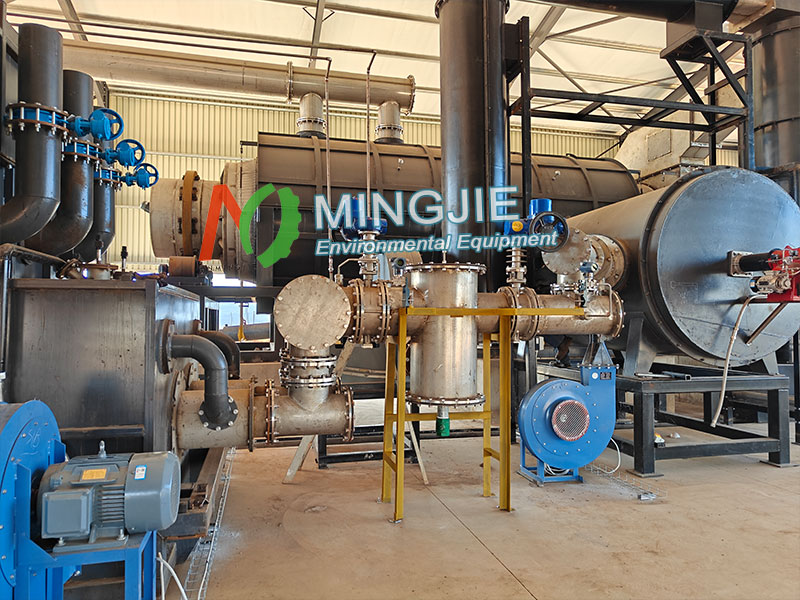
A typical biomass carbonization plant for biochar production consists of five core systems:
An Australian general waste and tire recycling authoritative body turned to Environment Minister Sussan Ley in November last year with a request to prohibit whole bale tire…
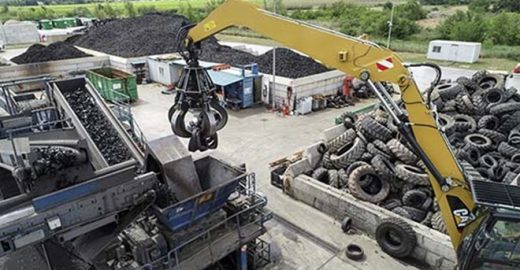
Aliapur – a French end-of-life tire management authority – recently announced a call for applications to participate in a tender to renew end-of-life tire collection and recycling contacts for 2021–2024..