The pyrolysis of waste tyres can enable comprehensive resource recovery and utilization. Pyrolysis plant can convert waste tyres into pyrolysis oil, carbon black, steel wire, and pyrolysis gas. The carbon emission reduction potential of waste tyre pyrolysis is mainly realized by material substitution and energy self-sufficiency.
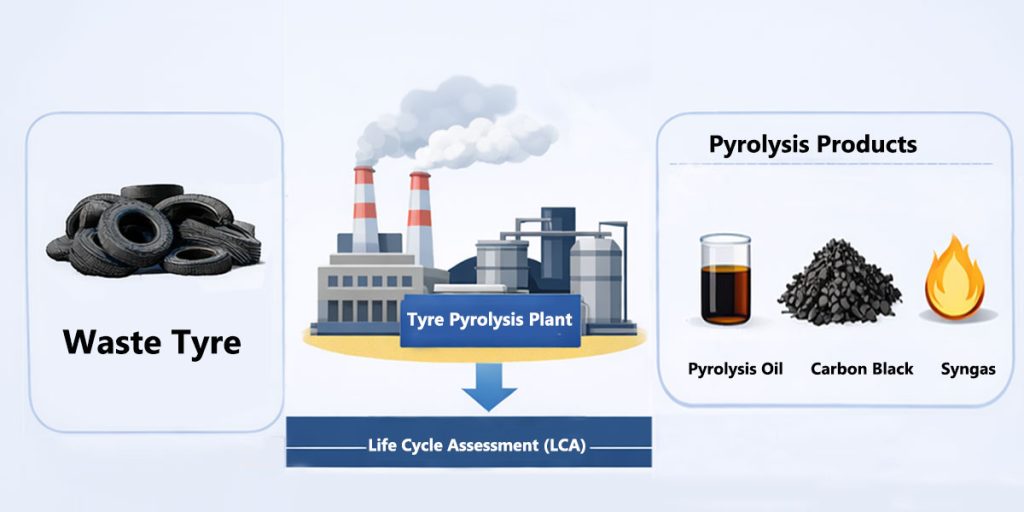
Transforming emission reduction potential into market-recognized "carbon assets" requires scientific accounting.
Life Cycle Assessment (LCA): This is the cornerstone for quantifying emission reduction benefits. Only through scientific calculation using LCA can the true emission reductions of tyre pyrolysis products, thus enabling the application for carbon credits.
With increasingly stringent environmental regulations, the policy direction for the resource utilization of waste tyres is becoming clearer. This has increased the market acceptance of pyrolysis technology and attracted significant capital and enterprises. It has also driven the rapid growth of the global waste tyres pyrolysis project market. Data shows that the annual production of pyrolysis oil, crude coke, and refined recovered carbon black has reached 1.7 million tons, 1.2 million tons, and 180,000 tons.
The development prospects of the waste tire pyrolysis industry are very promising. From a market size perspective, the global pyrolysis of waste tyres market will continue to expand. It is estimated that by 2030, the global waste tire pyrolysis oil market size will reach US$15 billion, with a compound annual growth rate of approximately 12%.
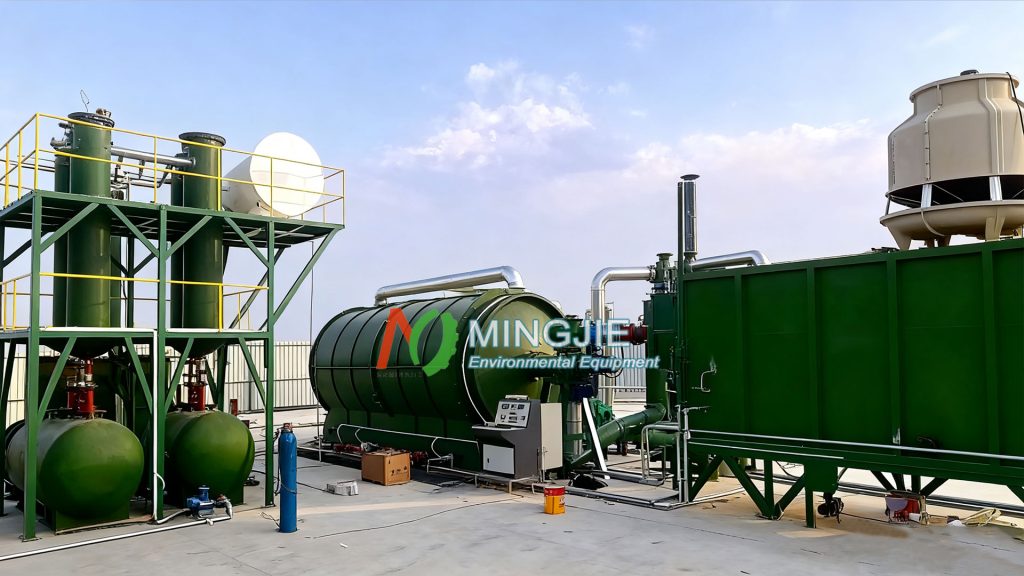
Technological innovation will remain the core driving force for the development of the tire pyrolysis industry. In the future, waste tyre pyrolysis technology will develop towards higher efficiency, intelligence, and environmental friendliness.
In terms of efficiency, tyre pyrolysis plant design will further improve pyrolysis efficiency and production capacity, reducing production costs. In terms of intelligence, it will realize automated control and intelligent management of the tire pyrolysis oil production process.
In terms of environmental friendliness, it will reduce waste emissions and environmental pollution. This will enable the efficient utilization of resources and promote sustainable development.
An Australian general waste and tire recycling authoritative body turned to Environment Minister Sussan Ley in November last year with a request to prohibit whole bale tire…
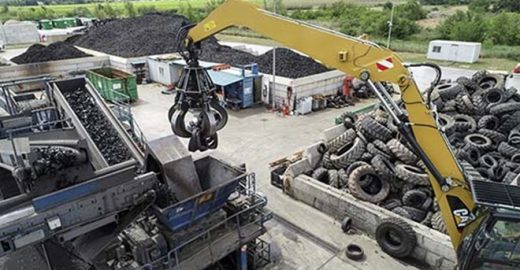
Aliapur – a French end-of-life tire management authority – recently announced a call for applications to participate in a tender to renew end-of-life tire collection and recycling contacts for 2021–2024..