Plastic pyrolysis is a process that uses heat to recycle or dispose of waste plastics. The plastic pyrolysis process is a non-oxidative thermal degradation process. also known as pyrolytic fuel oil, as well as syngas and carbon black. Plastic waste heats up in a special oxygen-free chamber, producing hydrocarbon fuels like low-grade fuel oil. A plastic pyrolysis plant is an essential device in contemporary waste recycling programs.
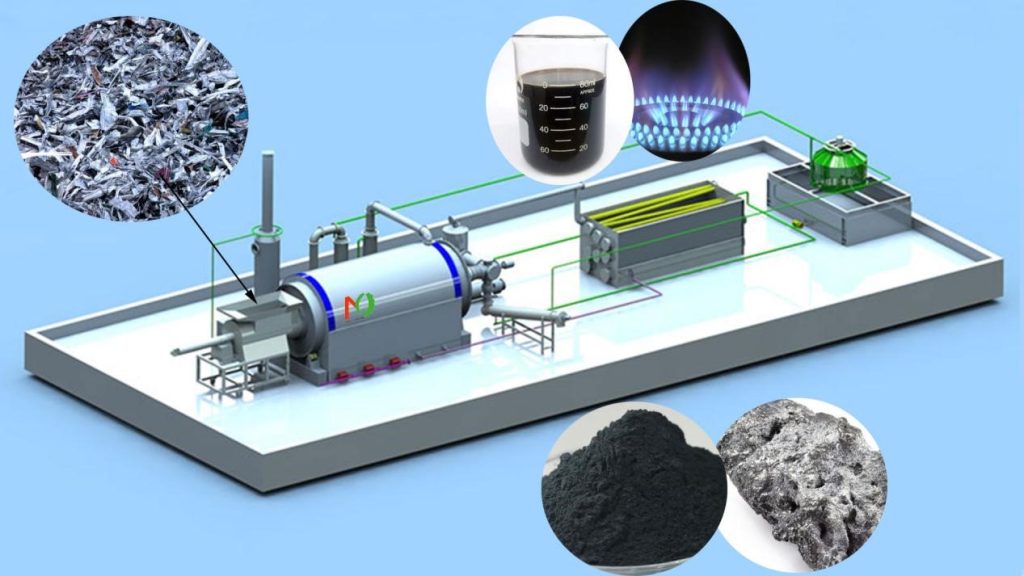
Our continuous pyrolysis plants are far better than Batch pyrolysis systems. Our Continuous plant is running 24/7/365 which is always improving the plant capacity and plant efficiency. High efficiency and less down time is always preferred by our industries clients. Our continuous pyrolysis system can help to solve plastic waste problems and create new economical product streams.
A number of major cost components are involved in the setting up of a plant. In this case these are: - Capital goods 40-60% of the total investment. - Construction & erection 20-30% of the total investment. - Engineering 10-15% of the total investment.
The selection of technology has a significant influence on capital expenditure as well as operational efficiency. Our studies have shown that the advanced continuous pyrolysis technology requires a higher capital investment but also offers the best economic returns. The capital expenditure is largely dependent on the reactor design, level of automation. the capacity of the plant. Again, the selection of batch versus continuous processing also has an impact on both capital and operating costs.
Refractory materials protect the equipment from heat during the pyrolysis process. High grade steel is the main structural material for the reactor vessel. The plant uses different construction materials according to design specifications and local availability The insulation of heating systems is also very effective in reducing energy losses.
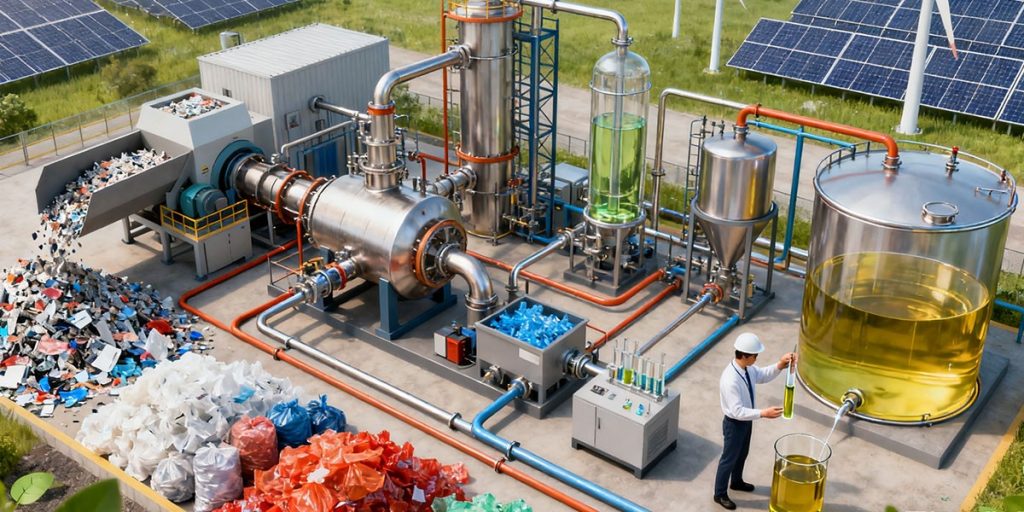
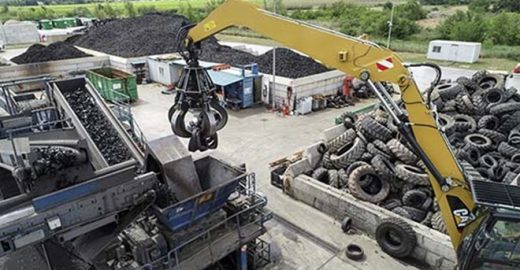
Mainly the essential equipments in pyrolysis tyre recycling plant are: pyrolysis reactors, condensation system, gas cleaning system. machinery needed for feed preparation of tyres and plastics, such as plastic sorting machine, plastic crushing machine. heat exchanger for heat recycling. control system for safe working and stable qualified products. storage tanks for inventory.
The Location Selection is a very important factor which affects the capital and running cost of the project. By selecting the locations close to the source of the plastic waste will help in reducing the transportation cost. The availability of electric, water. gas facilities in the location of project affects the investment required for the infrastructure facilities in the project. The industrial location which is required for the implementation of recycling plant must be approved by local municipalities. should not cause any problem with the local residents.
This section outlines certain costs which are dependent on specific site conditions. Such costs would be involved to determine the condition of the site before any work is undertaken and to establish whether any ancillary work is required before construction can begin. In the case of the costs for foundation work, the major items of heavy construction equipment and eventually the reactors will be located on the foundations. In some cases, connecting services may require considerable additional work and increase costs, especially in rural areas far from towns and civil facilities. Most of these costs arise from improving site access to transport materials and products, particularly where paved roads are insufficient. Conducting an environmental site assessment can identify unexpected soil problems that engineers must address or remediate before starting any structural development.
Environmental regulations play a significant role in project design and contribute substantially to capital costs. Engineers must implement stormwater run-off and structural noise abatement measures to reduce operational noise impacts on local residents. Air emission control systems are installed to meet specific particulate and gas emission standards. Wastewater treatment systems are designed to effectively manage all process water.
Permitting processes require comprehensive environmental impact assessments and engineering studies. Legal compliance costs include permit fees, consultant services, and ongoing monitoring requirements. Environmental protection measures represent 15-25% of total project investment. Regular audits and reporting ensure continued regulatory compliance throughout plant operation.
Labour costs vary with the degree of automation at a recycling plant and with local wage rates. Highly skilled staff, such as operators. are needed to operate the process control systems and to carry out the required maintenance. Utilities like electricity and cooling water are costly items. The price of the feedstock also varies greatly depending on the availability of plastic waste and current market prices.
Preventive maintenance planning helps to minimize unscheduled downtime and repair costs. Routine equipment checks are an excellent way of nipping potential problems in the bud before a major failure occurs. An adequate level of spare parts in stock can also ensure that any repairs are carried out quickly. Regular maintenance contracts with suppliers can also provide invaluable access to technical information and provide warranty protection. Properly planned and executed maintenance can also add years of effective service to assets and at the same time, improve process efficiency.
The typical bank loan is used to finance the core operations of the established business of financially strong companies. The typical method of financing the purchase of equipment is through equipment financing. Project financing is a financing method used to finance large infrastructure projects by involving a variety of funders and by spreading risks and rewards amongst them.
Government incentives significantly reduce project costs through the provision of grants, tax credits, and low-cost subsidized financing. other emerging alternative energy sources such as biomass to gasoline refineries. Environmental improvement grants are also available for waste reduction. pollution control technologies as well as financing for energy from waste projects. Projects may also be eligible to benefit from new carbon credit markets which can provide an additional source of revenue as a result of carbon reductions achieved by successful projects. The impact of these incentives can potentially reduce the real effective cost of a project by as much as 20-40%.
Fuel oil generates our primary revenue and is traded on the high-value energy markets. The plant uses syngas as a heating fuel for its own operations, and any surplus is sold on the external market. Carbon black, a by-product, is mainly supplied to the rubber industry and used as an additive for plastics. The waste acceptance fee is yet another source of income.
the market and sales conditions. Typical investment payback periods for a pyrolysis plant ranges from 3 to 7 years depending on the plant size. Larger continuous pyrolysis plants achieve higher economies of scale and hence shorter payback periods. The demand for alternative fuel sources. the associated prices of the products derived from waste ensures profitable sales. Improvements in plant operation and efficiency through control systems and optimisation also result in shorter payback periods.
Advanced reactor designs are expected to offer increased thermal efficiency and lower capital costs per unit of capacity. Modular construction techniques will allow for quicker assembly and startup of new plants. Advanced automation systems will help to reduce labor requirements and provide more reliable process and safe plant operation. Heat integration techniques will be used to improve energy recovery and reduce the consumption of utility processes.
Recycled materials are in demand which boosts the value of our products. the overall economics of the projects we deliver. The circular economy agenda continues to focus on plastic waste management and plastic recycling technologies. Carbon pricing adds further value to our expertise in delivering emission reduction projects. Technology standardization lowers engineering costs and increases reliability of equipment across our customer base.
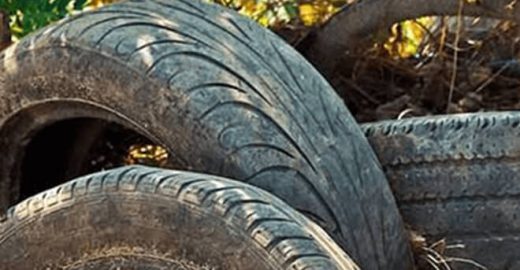
An Australian general waste and tire recycling authoritative body turned to Environment Minister Sussan Ley in November last year with a request to prohibit whole bale tire…
Aliapur – a French end-of-life tire management authority – recently announced a call for applications to participate in a tender to renew end-of-life tire collection and recycling contacts for 2021–2024..