Biochar is a carbon-rich material produced by heating organic matter, such as wood chips, straw, or agricultural waste, in a low-oxygen environment through a process called pyrolysis. Produced by Biochar Machine. Its composition primarily consists of stable carbon, along with trace minerals and ash, making it a highly porous substance ideal for various applications. This unique structure allows biochar to act as a long-term soil amendment, distinguishing it from other organic matter that decomposes quickly.
The ecological and agricultural effects of biochar are very apparent. The application of biochar reduces emissions of green house gases like CO2 because they are stored long term in the soil. With biochar the emission of greenhouse gases can be lowered. Soil erosion can also be reduced with biochar and less chemical fertilizers have to be used as the biochar boosts the availability of nutrients in the soil. As mentioned in our knowledge base The production and use of biochar can reduce greenhouse gas emissions and promote carbon circulation. Therefore the application of biochar is in accordance with the principles of sustainable farming.
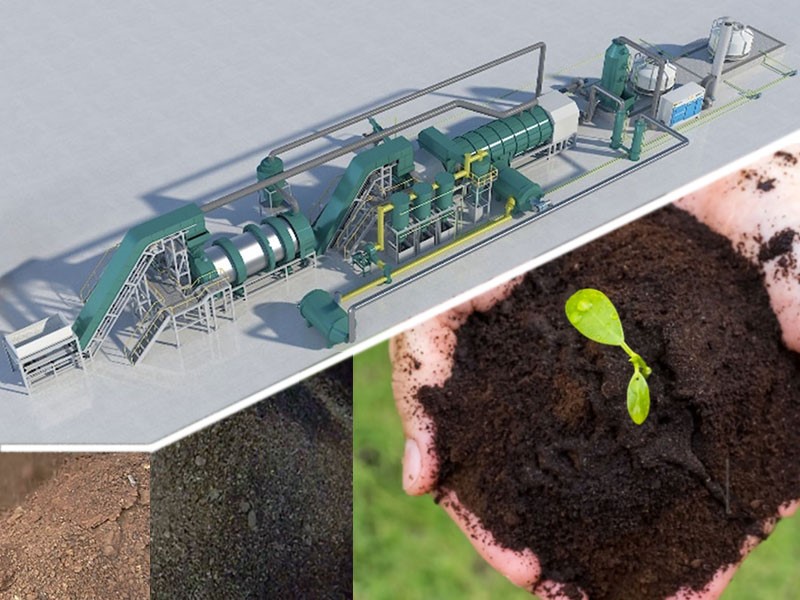
Our biochar supports high soil fertility and good soil health. Biochar increases the porosity in the soil and so enables a good water holding capacity and air exchange in the soil. This effect is especially relevant for sandy soils. The micro life in the soil is also increased. So nutrients such as nitrogen and phosphorus can be taken up by the plants more efficiently, as they are not lost from the soil, as this would not be in the interest of the plants. Biochar is a long term sustainable farming tool for maintaining productive soils.
In the market, there are many biochar machines designed to meet the demands of various sizes of operators. From small portable carbonization machines for farmers, to large fully automatic biochar machines, the choices are many. According to our knowledge base, The characteristics of the Skid-mounted biomass carbonization equipment are: Convenient to set up, saves land, saves energy and protects the environment, which is highly economical and widely applicable. The Fully automatic bamboo charcoal making machine has high output speed and fast charring speed, which can achieve continuous production. Different models of machines can be chosen based on the scale of the biochar production business of farmers and enterprises.
As previously introduced, main parts of biochar production equipment are: reaction furnace for pyrolysis, systems for feeding and discharging biomass and biochar. Generally speaking, advanced cooling designs are required to remove heat generated in the process. According to the knowledge base, the machine can be loaded with bamboo materials at one end and charcoal can be discharged from the other end, and it can realize carbonization of 30-50 tons of bamboo chips in a day.
How to choose suitable biochar machine for agricultural? Capacity of biochar machine, different capacity biochar machines can meet different needs. Small scale farmland need mobile machine, while medium and large scale farmland are better to use fully automatic machines. This depends on the type of feedstock or biomass materials that you can use in the biochar machine, which could be wood, straw, or other crop residues. As with any piece of agricultural machinery, it is important to consider energy efficiency, ease of maintenance, and the overall cost of ownership. And in order to get the best use of biochar production equipment, the agricultural production scale should be taken into account.
Biochar equipment are effective tools for turning redundant farmland biomass into valuable resources. They enable the reutilization of farmland residues through transformation. Biomass carbonization equipment can convert waste biomass into high value-added products. This process also helps solve environmental pollution caused by burning biomass. Such applications align with the principles of sustainable development and support a circular economy.
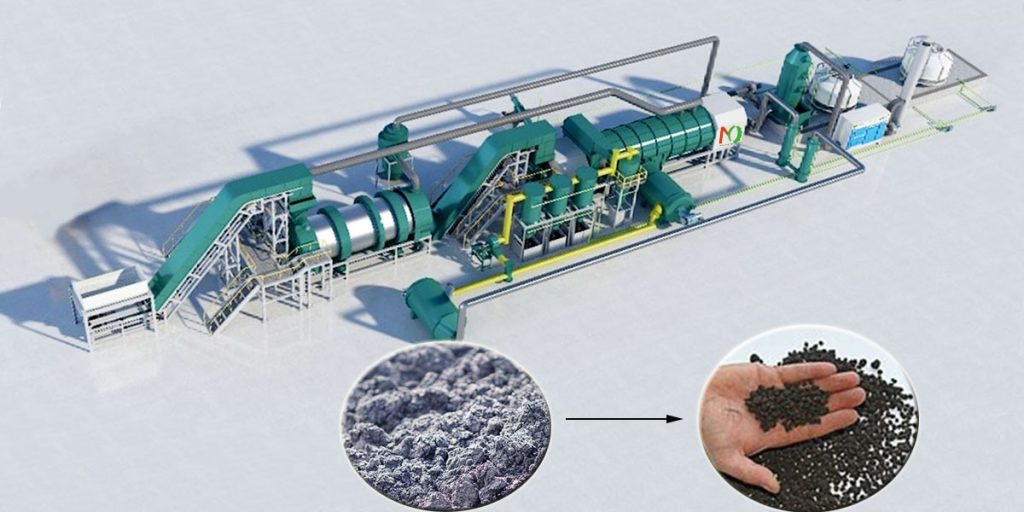
Traditional kilns, often simple pits or mounds, differ significantly from modern biochar equipment. While traditional methods are labor-intensive and produce inconsistent results with higher emissions, modern kilns are engineered for efficiency and control. They feature enclosed systems that minimize air pollution and optimize heat distribution, resulting in higher-quality biochar. This technological advancement makes modern biochar equipment for sale a preferred choice for farmers seeking reliable output.
Biochar equipment benefits have been proven for both small and large scale agriculture. Small-scale farmers can afford to have small-scale highly portable, low cost technology that requires low investment like the - Skid mounted design, continuous operation, generally used as a verification machine. Large scale agricultural operations also require high capacity technology in order to maintain continuous biochar production for large scale soil amendments needs. Therefore biochar equipment cater to needs of all scales of agriculture thereby enhancing agricultural productivity across scales.
Applying biochar to different types of soils requires different applications. In sandy soils, biochar is applied by mixing it into the top soil to improve water retention and nutrient absorption. In clay soils, biochar is applied in layers to alleviate soil compaction, and to help drainage. Biochar application rates generally range from 5 to 20 tons per ha, depending on soil type and crop requirements. Biochar can be applied as a standalone product or with compost for increased benefit to soil health.
Long term effects on soil structure and fertility can be dramatic. Biochar acts as a habitat for microorganisms and increases plant available nutrients. Biochar acts as a liming material increasing soil pH over time. Biochar can prevent leaching of valuable plant nutrients during heavy rainfall events; keeping them available for plant uptake. Biochar is a key tool in sustainable agriculture practices to achieve the highest level of soil health, fertility and productivity.
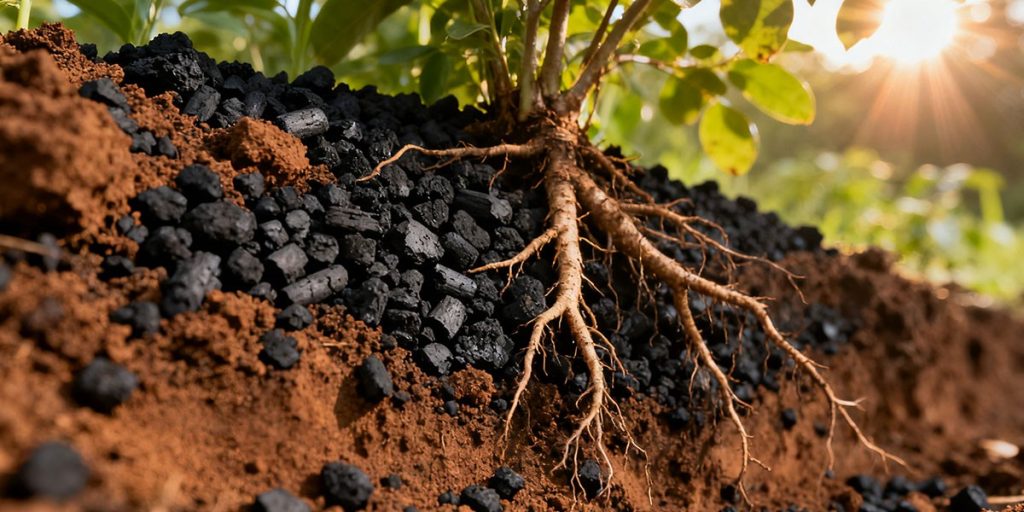
Biochar positively impacts crop growth and productivity. Biochar increases root growth by enhancing the atmospheric exchange of the soil, hence increasing the moisture in the soil. Experiments carried out in some districts in Cameroon with maize, rice and wheat cultivation demonstrated a higher yield when the crops were cultivated in the soil with Biochar. Increasing crop yields is possible through better nutrient uptake and through alleviating stress that farmers experience when lack of water and poor soils undermine crop growth. Biochar therefore presents great hope to agriculture.
The following case studies show the effects of biochar on different crops. In tropical smallholder agriculture in Africa, applying biochar increased cassava yields. This improvement was due to enhanced soil fertility. In temperate zones, vineyard owners observed better grape quality on sandy soils with biochar application. Beyond these examples, biochar can address various farming challenges. It therefore contributes to global food security.
Biochar can sequestration carbon in soil for hundreds to thousands of years. By reducing carbon dioxide in the atmosphere, carbon sequestration decreases greenhouse gas emissions. The knowledge base on biochar The production and use of biochar can reduce greenhouse gas emissions and promote carbon circulation. By using biochar, as a resource and service for farmers, we can create a better planet.
Carbon sequestration through biochar is an important part of the climate change mitigation strategy. Agricultural activities emit vast amounts of carbon into the atmosphere, making biochar a valuable method for carbon offsetting in the farming sector. When biochar is combined with practices like reduced tillage, it increases soil carbon storage while at the same time boosting agricultural yields and improving climate change resilience. Thus, biochar becomes an indispensable tool for addressing some of the challenges affecting today’s agriculture.
This section outlines the costs of setting up a biochar machine. Prices vary depending on machine type and capacity. Portable or manually operated models are generally less expensive. Fully automated models tend to have higher upfront costs. Additional investments include material and fuel preparation. Costs for building or purchasing shelters and generating power should also be considered.
Despite higher initial costs, revenues from biochar sales contribute to profitability. Reduced fertilizer use also provides financial benefits. Biochar has strong market demand, creating additional income for farms and enterprises. In some countries, subsidies or support prices may be available. These are often offered under national agricultural policies promoting sustainable farming practices.
A biochar machine uses a pyrolysis method that burns biomass in a low oxygen environment, turning it to biochar, syngas and biooil. The wood chips or straw biomass materials are thrown into the reactor and heated in a few hundred degree Celsius. The energy required for the heating is sustained through the syngas produced. Simple maintenance required.
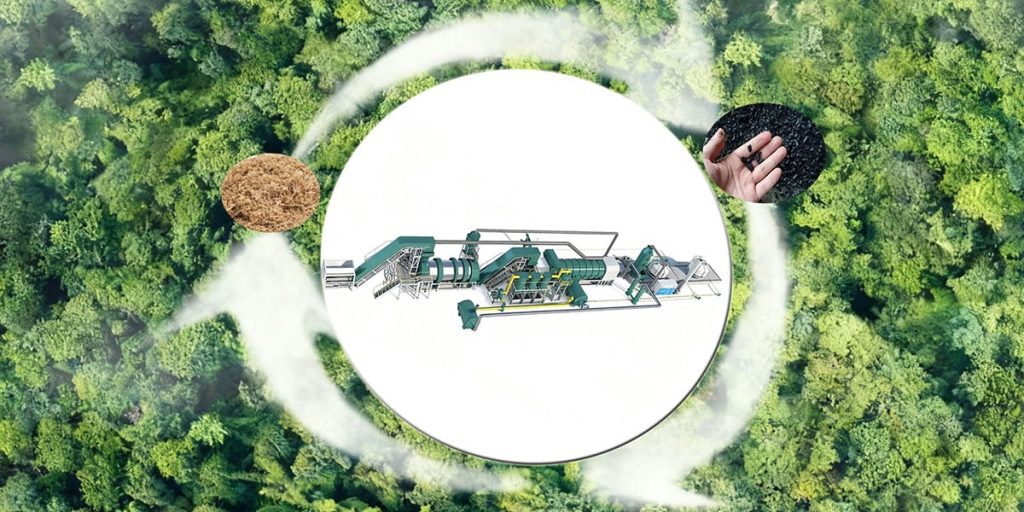
While biochar machines promote sustainability, environmental concerns exist. Emissions during production, particularly if not properly managed, can include volatile organic compounds or particulate matter. However, modern machines are designed with emission purification systems to minimize impact. The knowledge base mentions, Special emission purification system. Sustainability factors, such as sourcing biomass responsibly, are also critical to avoid deforestation or resource depletion. Regulatory compliance with local environmental standards ensures safe operation, making it vital for farmers to choose equipment that meets these guidelines.
Biochar is compatible with most soil types, including sandy, clay, and loamy soils, but its effectiveness varies. In sandy soils, it significantly improves water and nutrient retention, while in clay soils, it aids in reducing compaction. Recommended usage rates typically range from 5 to 20 tons per hectare, adjusted based on soil tests and crop requirements. However, challenges exist, such as potential over-application leading to nutrient imbalances or reduced effectiveness in highly acidic soils without pH adjustment. Careful planning and monitoring are necessary to ensure biochar delivers optimal benefits across diverse soil conditions.
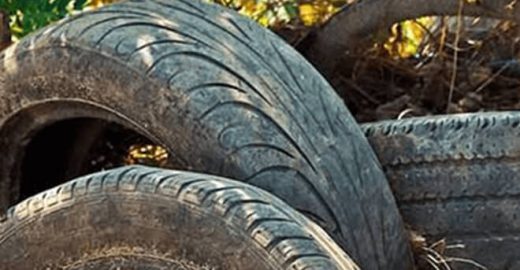
An Australian general waste and tire recycling authoritative body turned to Environment Minister Sussan Ley in November last year with a request to prohibit whole bale tire…
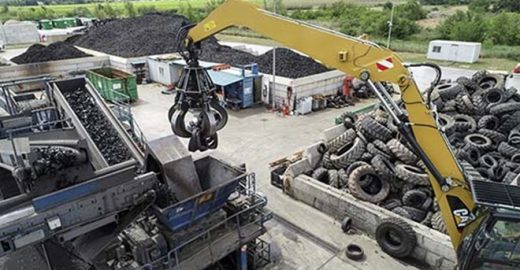
Aliapur – a French end-of-life tire management authority – recently announced a call for applications to participate in a tender to renew end-of-life tire collection and recycling contacts for 2021–2024..