
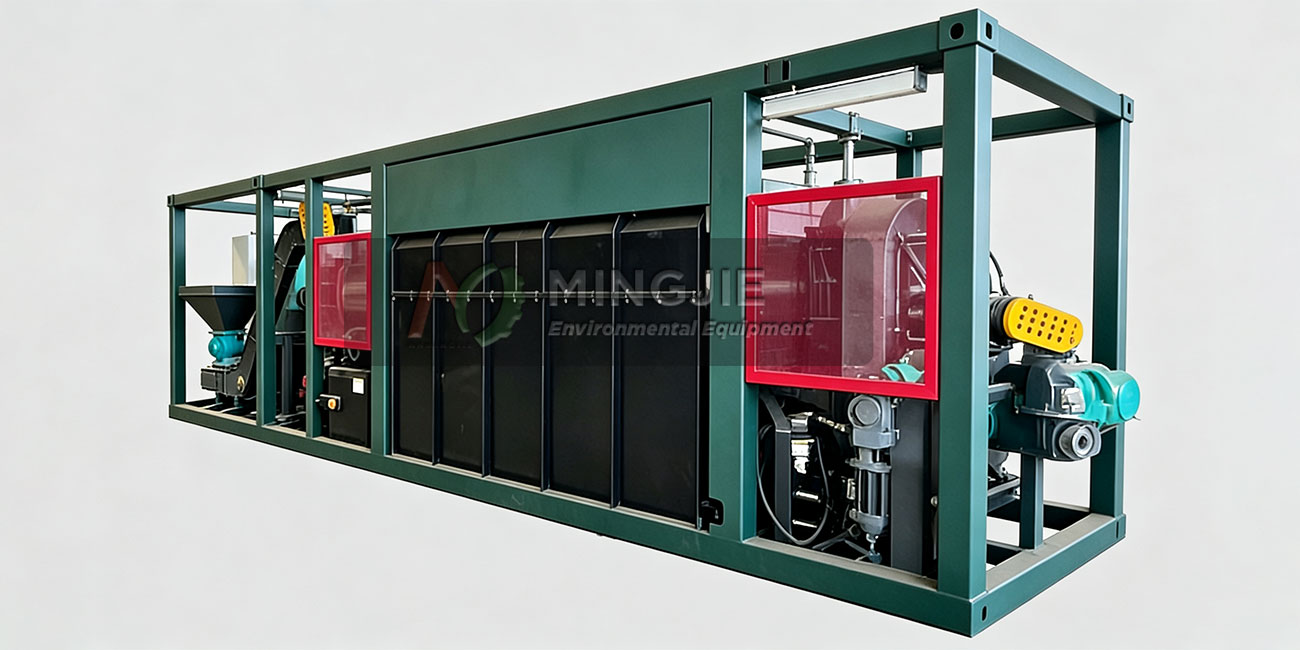
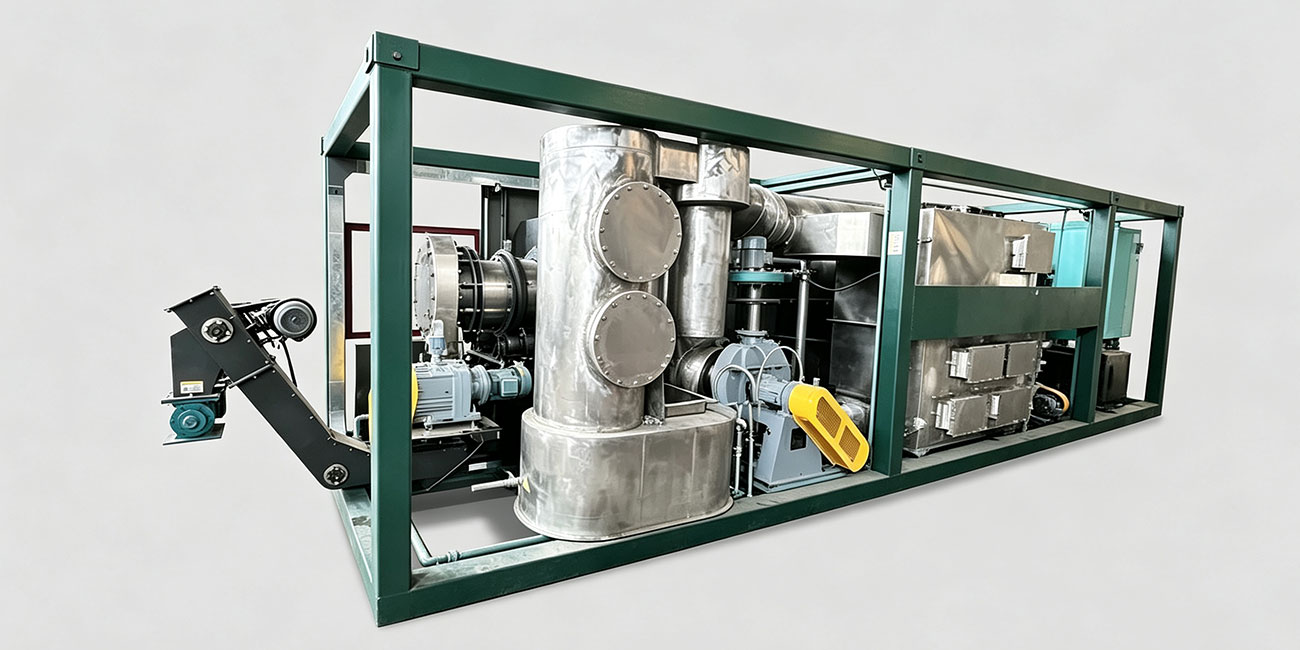
Technical Specifications
| Item | Content | ||
| Model | No. | Capacity | Operation |
| MJT-100 | 100KG/H | Fully continuous | |
| Accepted materials | Rice husk, saw dust, wood waste, straw, palm shell, coconut shell, | ||
| End products | Biochar/Charcoal, Syngas, Tar& Wood vinegar(optional) | ||
| Applicable fuel | Coal/natural gas/LPG/ Diesel/wood/pyrolysis oil | ||
| Material of reactor | 304 stainless steel | ||
| Reactor structure | Double cylinders | ||
| Cooling | Water Cooling | ||
| Land Required | 300-400m2 | ||
Raw Materials
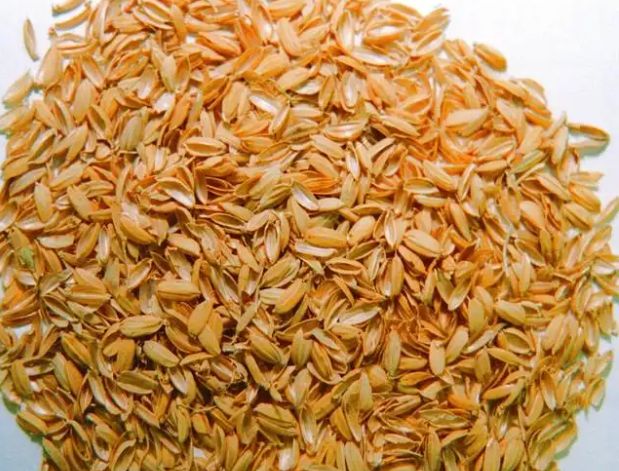
Rice husk
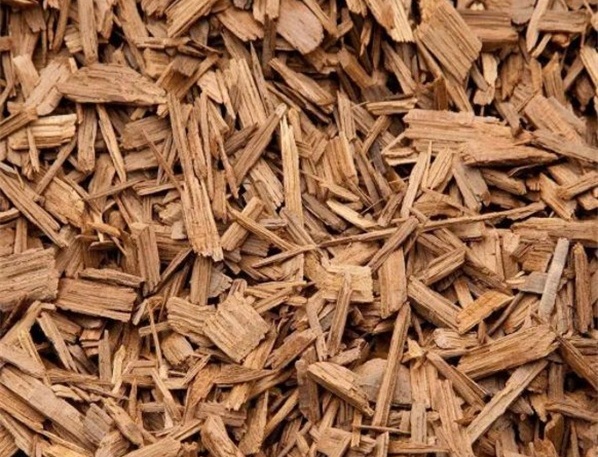
Woody waste
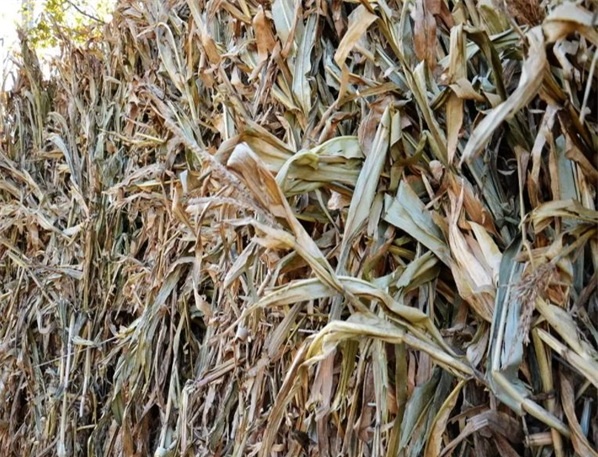
Straw
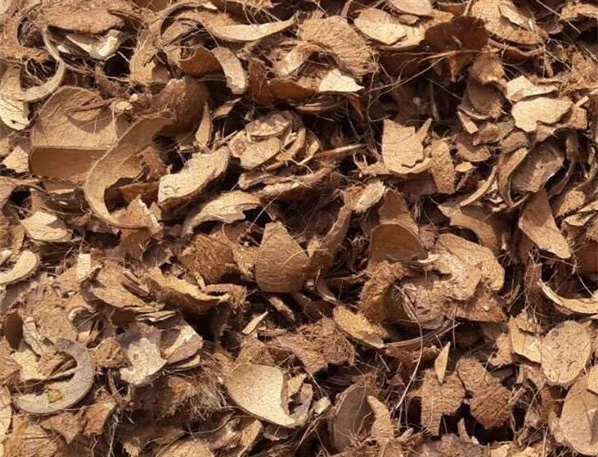
Coconut shell
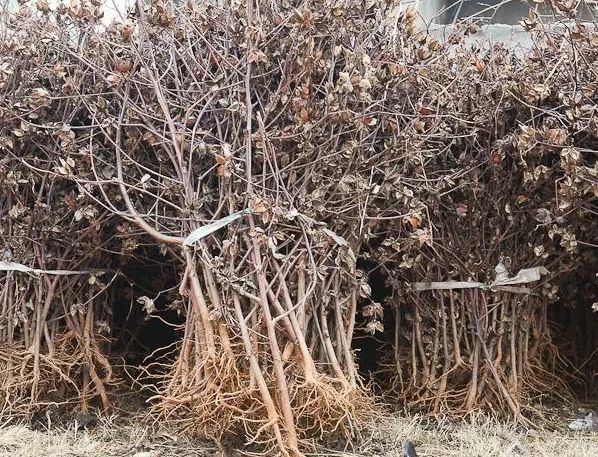
Jute rod
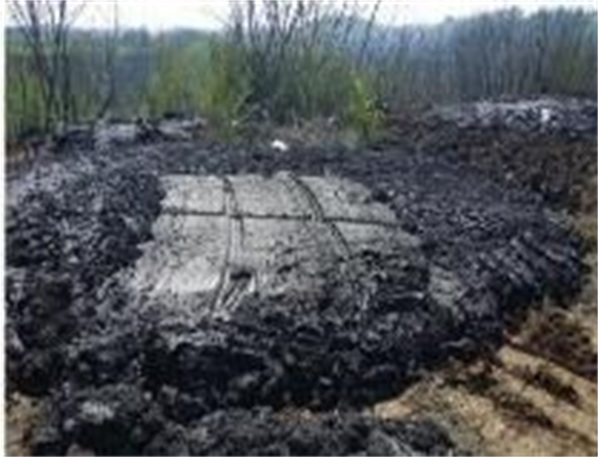
Sludge
Agricultural and Forestry Residues: Straw, sawdust, rice husks, fruit shells, bamboo chips, tree branches, coconut shells, palm shells, sugarcane bagasse, etc. These abundant feedstocks offer a solution to the pollution problems associated with open burning.
Sludge: Municipal sewage sludge and industrial sludge. Biomass pyrolysis carbonization plant significantly reduces volume and weight, and resolves sludge disposal challenges.
Animal Manure: Livestock and poultry manure (chicken, cattle, and pig manure). Pyrolysis carbonization eliminates pathogens, parasite eggs, and odors, producing biochar for carbon-based organic fertilizer.
Final Products
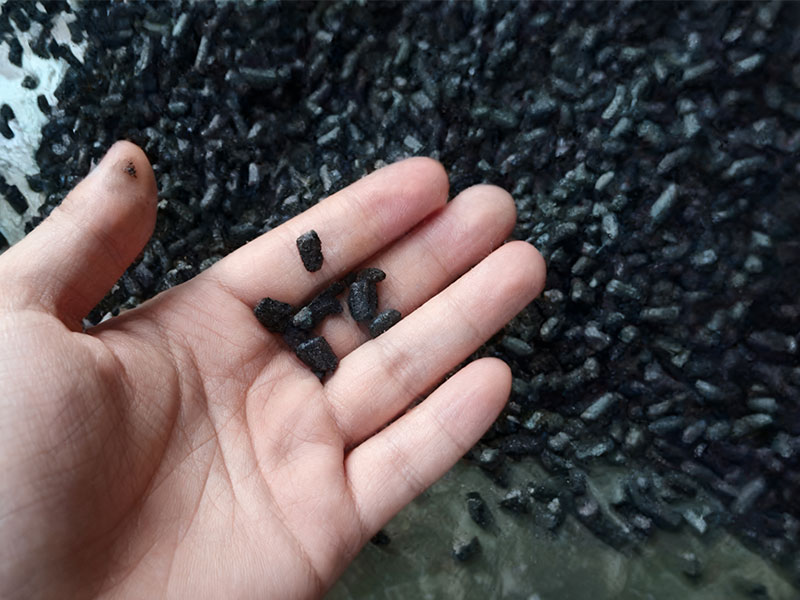
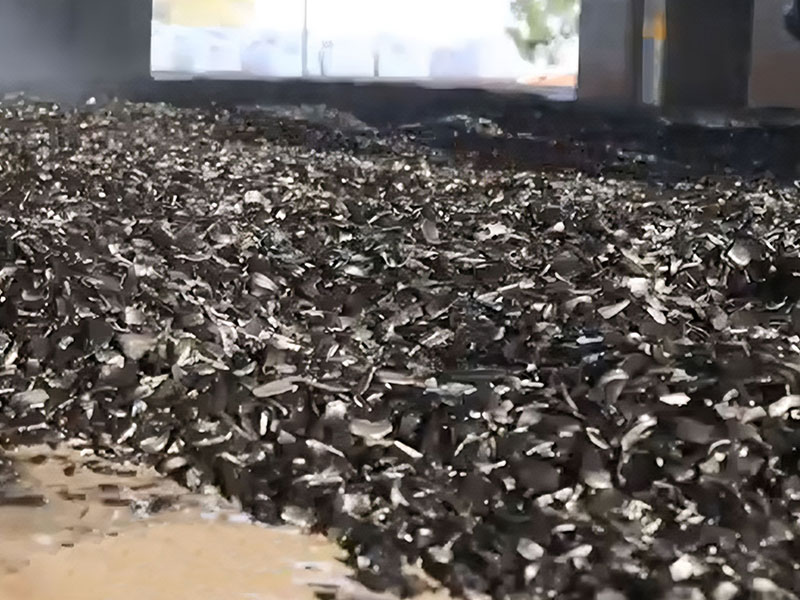
| Name | Picture | Application |
| Biochar/Charcoal | 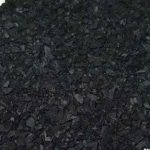 |
Used as soil conditioner, carbon sequestration, improve the quality of soil Used as fuel for industry heating and cooling or BBQ Can be reprocessed into activated carbon, widely used in the smelting, chemical fields. |
| Syngas | 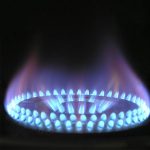 |
Can be recycled to heat the carbonization host. By this way, you can reduce a lot of fuel costs. |
Main Parts
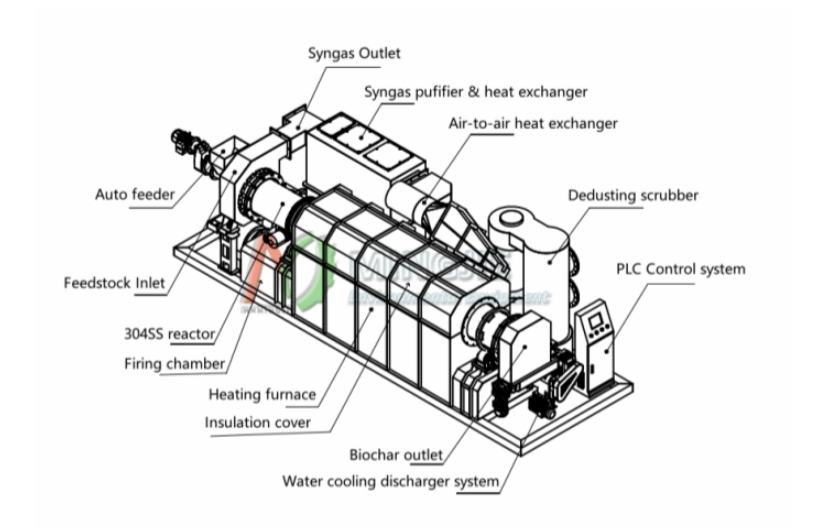
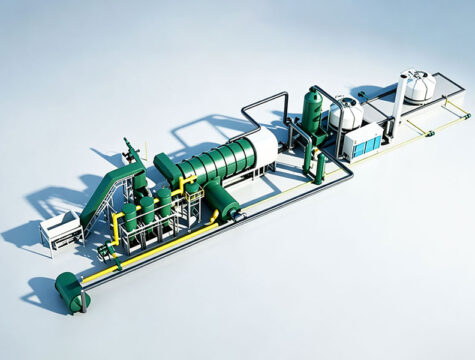
Feeding and Conveying Unit: Ensures continuous feeding while isolating the system from the atmosphere, thereby preventing oxygen from entering the pyrolysis reactor and guaranteeing oxygen-free carbonization.
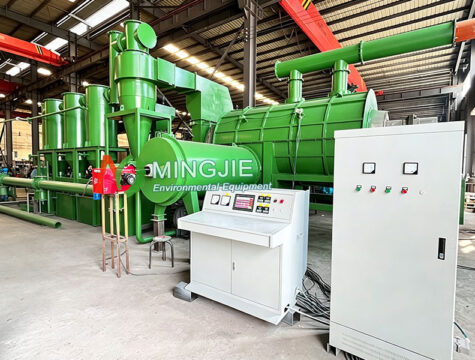
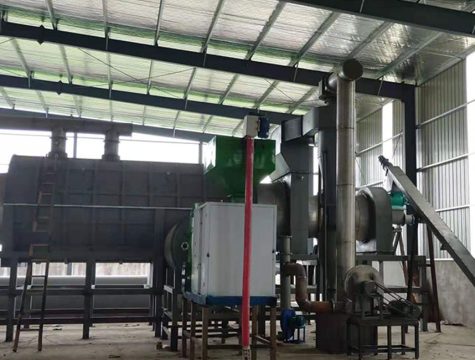
Continuous Pyrolysis and Carbonization Reactor: Features a sealed cylindrical vessel where feedstock moves slowly, allowing for continuous input of raw material and continuous discharge of biochar.
Syngas Purification and Heat Exchange System: Recycles syngas generated during pyrolysis for combustion to provide heat, thereby reducing the consumption of external fuel.
Biochar Discharge and Cooling System: Rapidly cools the high-temperature biochar in a sealed environment to prevent re-ignition.
Flue Gas Purification Unit: Treated exhaust meets emission standards and environmental compliance requirements.
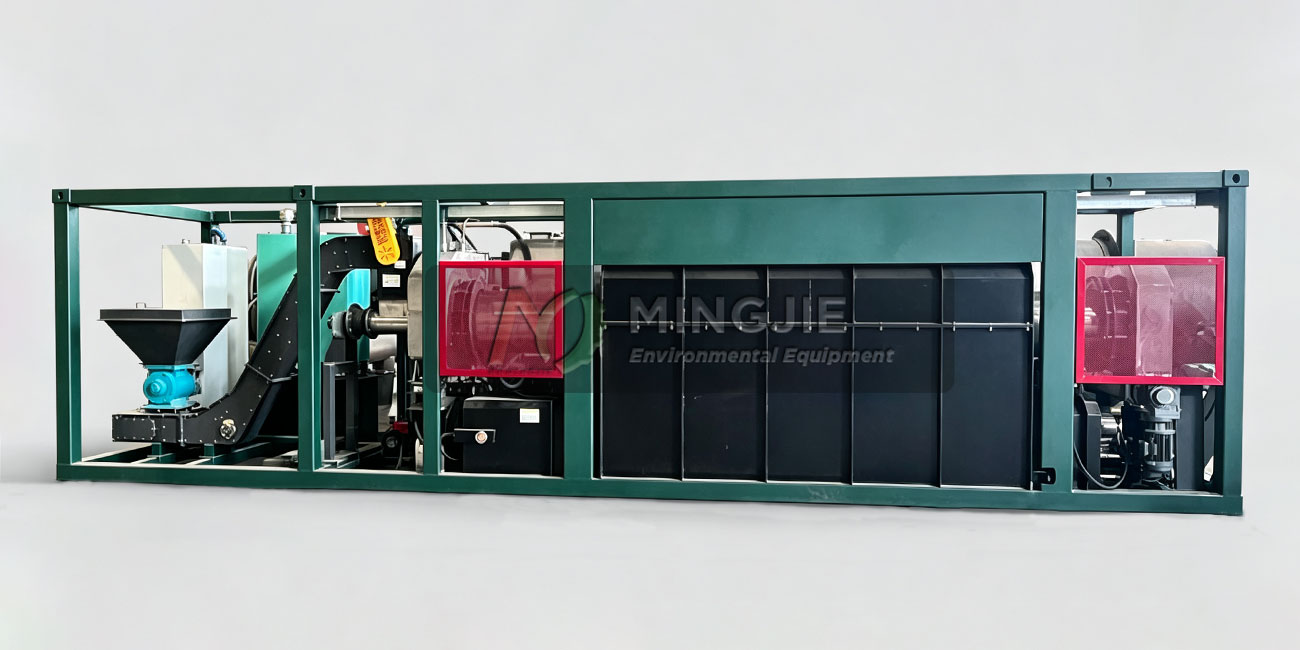
Automation and Power Unit: The entire large scale biochar production system is integrated onto a skid frame, with all piping and motors pre-installed for modular assembly.
Skid-Mounted Base Frame: A high-strength steel frame that secures the entire biomass pyrolysis unit as a single assembly. It supports whole-unit lifting and trailer transport, eliminating the need for a permanent factory building.
Our Advantages
Advantages of Small Scale Biochar Production Equipment
- Good as to be Pilot project for make demostration for invetors, government and verify the technology before setting big scale equipment.
- Skid mounted &Containerized design, compact structure, easy transportation and move.
- The key parts made of 304 stainless steel, can resist high temperature and corrosion, good applicability, long service life.
- 100% free installation, needs no civil work, can be put into use when unloaded from container.
- Fully Continuous running, PLC control, high level of automation, can be operated by 1 labor .
- Extreme energy saving design, two heat exchangers, greatly take use of the rest heat, save energy, high heat using efficiency.
— Air to air heat exchanger, warm-up combustion-supporting air, Increase waste heat utilization rate by 40%.
— Smoke and Syngas heat exchanger, Secondary heat the syngas to avoid tar & wood vinegar production, prevent the piping from jamming, greatly extend the continuously running time.
- Material release syngas during the carbonization process, after the purification, the syngas will be recycled as fuel for carbonization reactor heating and the first dryer heating.
- To pyrolysis, dehydrogenation, condensation and hydrogenation of aromatic compounds generated in the previous process.