Global waste tire accumulation creates a massive environmental burden for modern society. These "mountain-high" tire piles damage local ecosystems and create severe fire hazards. A waste tire pyrolysis plant represents the premier industrial solution to this growing crisis. This technology thermochemically converts complex rubber polymers into high-density energy carriers. As a professional pyrolysis plant manufacturer in China, Mingjie Group provides one-stop service. Our solutions for waste waste pyrolysis currently serve over 200 customers across more than 30 countries. This commitment to quality ensures reliable waste-to-energy recovery for global industrial markets.
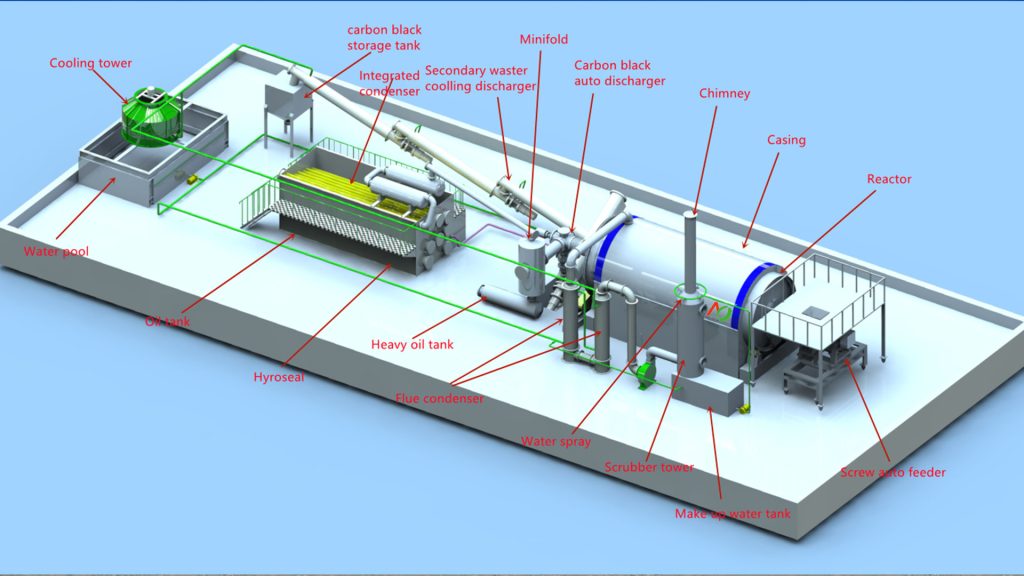
The waste tire pyrolysis plant utilizes a sophisticated thermal decomposition process. This reaction occurs in a strictly oxygen-deficient environment to prevent combustion. High temperatures break down the chemical bonds of discarded rubber materials. This conversion yields high-quality fuel oil, carbon black, and syngas. The system effectively recovers energy from various organic waste streams beyond tires. The plant also processes oil sludge, medical waste, and municipal solid waste. It handles complex materials like wind turbine blades and electronic waste successfully. The tire pyrolysis plant ensures every part of the waste finds a secondary use. Syngas generated during the process powers the reactor itself through a sealed system. This creates a self-sustaining energy loop for the entire industrial facility.
Every waste tire pyrolysis plant delivers a high-calorific alternative to traditional fossil fuels. Industrial boilers utilize this liquid energy for large-scale heating and power applications. The oil yield varies based on the specific purity of the feedstock used. For instance, pure materials like polyethylene or polypropylene yield 70% to 80% oil. This translates to 800 kilograms of fuel oil from one ton of material. Manufacturers benefit from the stable performance and high energy density of this resource. The waste tire pyrolysis plant provides a clean fuel for various heavy manufacturing operations. This output reduces industrial dependence on expensive oil and natural gas imports. Energy security improves significantly through the localized production of renewable fuel oil. Industrial users gain a competitive edge by lowering their long-term fuel procurement costs.
Raw oil from a waste tire pyrolysis plant often requires further industrial refinement. A dedicated pyrolysis oil distillation plant upgrades this crude material into premium fuel. This separate unit handles waste engine oil, transformer oil, and used lubricants. The distillation process effectively removes dark impurities and harmful pollutants from the oil. This transforms the raw liquid into bright non-standard diesel or gasoline. This refined product powers heavy-load, low-speed diesel engines and large ships. Marine vessels and diesel generators utilize this high-grade fuel with excellent efficiency. The tire pyrolysis plant serves as the essential first stage of energy recovery. Distillation then realizes the full economic potential of the initial waste stream. This equipment is a vital tool for maximizing the value of recycled resources.
The batch waste tire pyrolysis plant suits smaller production scales perfectly. These machines process between two and fifteen tons of waste every day. Operators can load whole tires directly into the reactor for easy processing. This batch tire pyrolysis plant requires a lower initial investment for entrepreneurs. New environmental industrial projects find this model highly accessible and technically reliable. The system completes its processing cycle within a 20-hour window. This timeframe includes feeding, pyrolysis, reactor cooling, and carbon discharging. The reactor reaches an optimal peak operating temperature of approximately 420°C. Batch systems offer high slag discharge efficiency after every single production run. They provide a versatile solution for processing diverse waste types in smaller quantities.
Larger industrial projects demand a fully automatic tire pyrolysis plant for high output. These units process up to 40 tons of material every 24 hours. Continuous systems require specific feedstock preparation to maintain optimal thermal efficiency. Operators must shred tires and remove all steel wire before feeding. The required feeding size ranges from 5mm to 8mm rubber granules. A fully automatic waste tire pyrolysis plant operates continuously without stopping for cooling. It features a water-cooled automatic slag discharge system for maximum safety. This allows for high-temperature carbon discharging without waiting for the reactor. The fully automatic waste tire pyrolysis plant maintains a clean and safe operating environment. It eliminates fly ash and maximizes daily energy throughput for large-scale operators.
A waste tire pyrolysis plant offers massive environmental advantages over traditional biomass incineration. Traditional tire burning releases dangerous dioxins, smoke, and high sulfur dioxide levels. In contrast, the tire pyrolysis plant produces significantly fewer harmful emissions. The oxygen-deficient environment prevents the formation of many toxic atmospheric pollutants. This technology reduces the release of NOx and SO2 during the recycling cycle. It also helps lower the emission of CO2 greenhouse gases globally. Governments favor the waste tire pyrolysis plant for its strict environmental regulatory compliance. The process reduces the total volume of garbage sent to local landfills. This protects groundwater and soil from potential hazardous waste contamination forever. Our CE and ISO certifications prove our global commitment to safety standards.
The waste tire pyrolysis plant ensures a high return on investment for stakeholders. It generates multiple high-value by-products for the global secondary commodity market. Carbon black serves as a vital filler in the plastic and rubber industries. Industrialists can also press carbon black into briquettes for high-energy heating fuel. The syngas produced by the waste tire pyrolysis plant offsets daily operational energy costs. This makes the entire waste management process more economically viable and profitable. Investors obtain high returns while solving critical environmental and waste challenges. The global demand for high-quality biochar and renewable fuel remains consistently high. It turns environmental responsibility into significant financial success. This model supports the core principles of a modern circular economy.
Proper maintenance extends the operational life of every waste tire pyrolysis plant. Operators must follow a disciplined weekly and monthly checking schedule for safety. Every week, technical staff should check wearing parts and lubricant levels. We recommend stopping the machine once a month for thorough cleaning jobs. Maintenance for continuous systems should occur twice monthly during plastic processing cycles. Although machines accept dirty materials, washing them improves the final oil quality. A well-maintained waste tire pyrolysis plant performs reliably for over ten years. Mingjie Group provides a comprehensive 12-month guarantee starting from the acceptance date. We resolve any quality-related issues during this period at our own cost. Our senior engineers offer technical support to ensure optimal machine performance levels.
Mingjie Group defines the future of global circular waste management through innovation. Our waste tire pyrolysis plant transforms discarded materials into high-value renewable energy. This technology addresses the urgent global challenge of solid waste accumulation effectively. Modern industries must adopt these sustainable practices to remain competitive and compliant. The waste tire pyrolysis plant offers a realistic path toward industrial carbon neutrality. Successful projects in thirty countries demonstrate our absolute technical and commercial leadership. More than 200 global customers trust our advanced environmental engineering and service. Adopting a pyrolysis plant is a critical step for modern industry. It creates a perfect balance between industrial production and environmental stewardship. This innovation protects the planet while fueling the future of global industry.
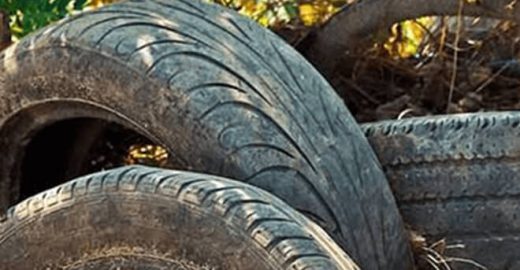
An Australian general waste and tire recycling authoritative body turned to Environment Minister Sussan Ley in November last year with a request to prohibit whole bale tire…
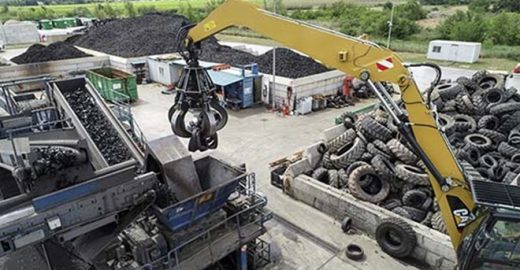
Aliapur – a French end-of-life tire management authority – recently announced a call for applications to participate in a tender to renew end-of-life tire collection and recycling contacts for 2021–2024..