Mingjie continuous pyrolysis equipment features a modular design. The modular design of continuous pyrolysis equipment offers a systematic solution that simultaneously addresses speed, quality, cost control, and flexibility. It effectively resolves common pain points associated with traditional large-scale engineering projects, such as long construction periods, high costs, and limited flexibility.
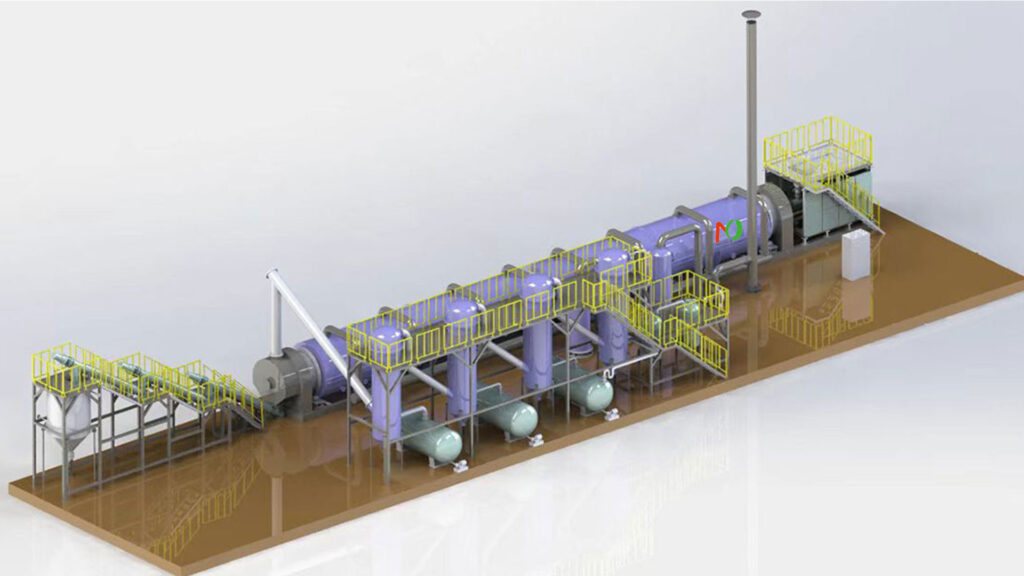
Simply put, the modular design of continuous pyrolysis equipment involves breaking down the entire system into independent, pre-fabricated functional units that can be flexibly combined. The continuous pyrolysis system can be divided into standardized, independent units—such as the feeding module, pyrolysis reaction module, heating and insulation module, oil-gas condensation and separation module, slag and carbon collection module, tail gas purification module, and intelligent electrical control module. Each system component is pre-fabricated in the factory, while the final assembly takes place on-site at the project location.
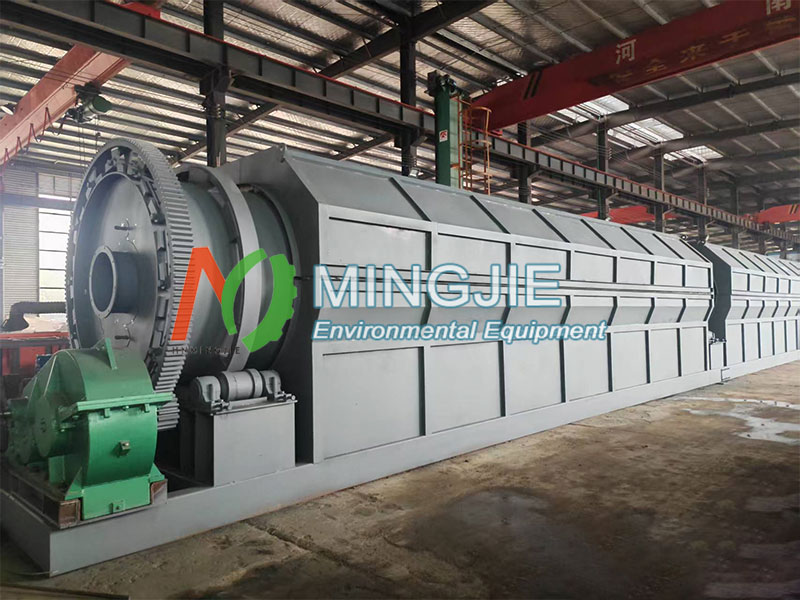
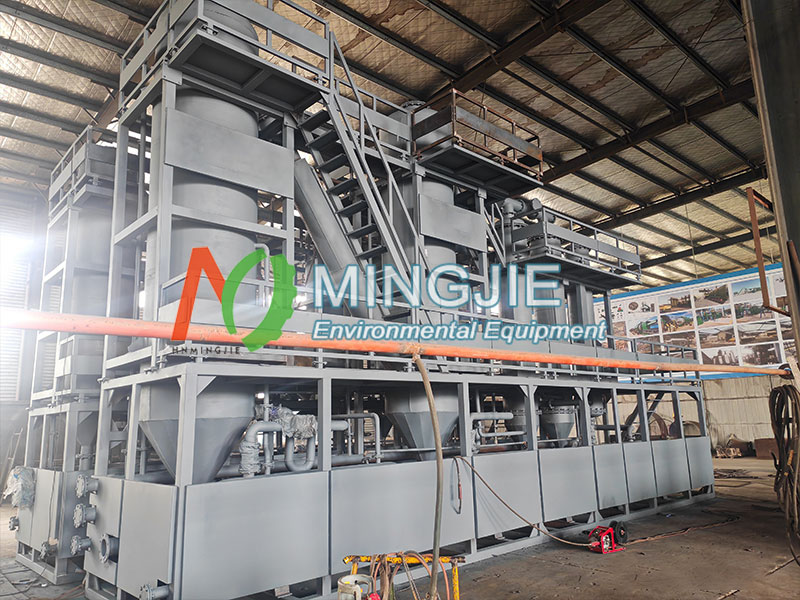
Its core advantage lies in significantly enhancing the speed, cost-efficiency, quality, and flexibility of tire pyrolysis projects. Specifically, the advantages of this design are reflected in the following areas:
Drastically reduced on-site installation time: Most manufacturing and pre-assembly work takes place in the factory. Once the pyrolysis equipment arrives on-site in modular form, it requires only rapid assembly. This approach can cut on-site installation time by up to 90%.
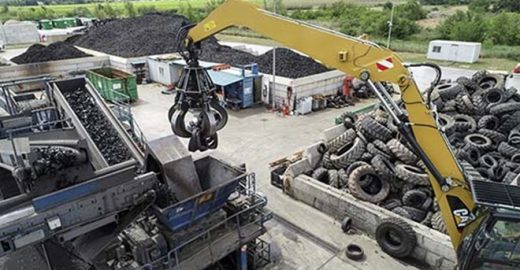
Significantly compressed project timelines: The duration from groundbreaking to commissioning is greatly reduced.A Hungarian company utilized modular continuous pyrolysis equipment to construct a waste tire pyrolysis plant in just five months.
Reduced management complexity: The use of prefabricated engineering modules significantly simplifies Engineering, Procurement, and Construction Management (EPCM).
Improved cost predictability: With a large portion of the work completed according to plan in the factory, the project budget is easier to control. This effectively avoids the cost overruns common in on-site construction.
Lowered O&M costs: Continuous pyrolysis plant components are modular and interchangeable. If a specific module malfunctions, it can be replaced individually without affecting the entire system, drastically reducing repair costs and downtime.
Extended equipment lifespan: Convenient module replacement and maintenance help prolong the service life of the entire system.
Guaranteed installation and manufacturing quality: Modules undergo pre-assembly and comprehensive commissioning within the controlled environment of the manufacturing plant, ensuring high quality.
Precise control: The modular design facilitates the integration of sophisticated control systems, enabling precise control over the pyrolysis reaction.
Facilitates technology scale-up: Modular pilot plants provide reliable data for industrial-scale expansion, effectively mitigating the risks associated with scaling up technology.
Strong adaptability and flexible deployment: Designs can be skid-mounted for easy mobility and transport, making them ideal for distributed processing in remote areas or at waste generation sites. Modular installation also allows for flexible adjustments—such as orientation—to suit specific site conditions.
Easy scalability and customization: Processing capacity can be flexibly expanded by adding more modules. Additionally, functional modules can be custom-engineered to meet specific client requirements.
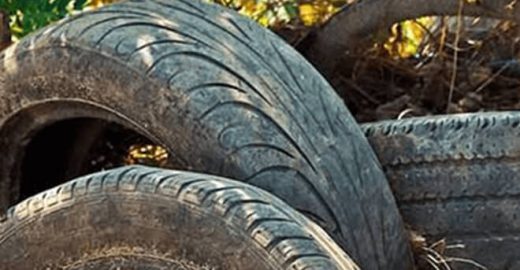
An Australian general waste and tire recycling authoritative body turned to Environment Minister Sussan Ley in November last year with a request to prohibit whole bale tire…
Aliapur – a French end-of-life tire management authority – recently announced a call for applications to participate in a tender to renew end-of-life tire collection and recycling contacts for 2021–2024..