The core difference between biochar and charcoal lies in their applications and the control of biomass pyrolysis processes. Charcoal production aims to maximize fuel output, while Biochar production focuses on creating charcoal materials with specific properties for specific applications. This leads to a series of differences between them in raw material selection, biomass pyrolysis process control, and carbonization equipment design.
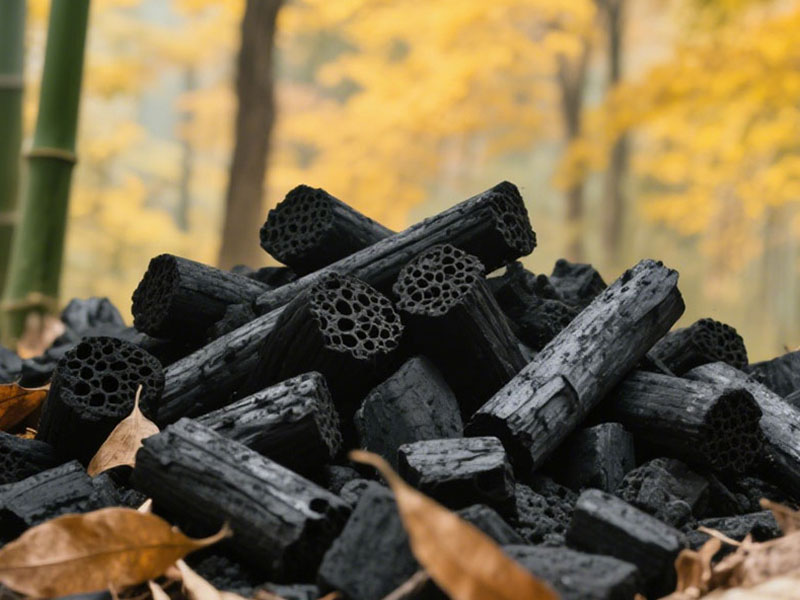
Charcoal is a traditional industrial and civilian fuel. It is a porous solid combustible material primarily made from wood-based raw materials, produced through incomplete combustion or air-isolated dry distillation. Its core production objective is to maximize calorific value and combustion efficiency while retaining combustible carbon components. Charcoal is essentially an energy product, mainly used for heating, cooking, and industrial smelting.
Biochar is an eco-friendly functional material. It is a stable, carbon-rich biochar prepared according to pyrolysis process standards, belonging to artificially modified biomass resources. Its core production objective is to improve pore structure, enrich surface functional groups, and enhance carbon stability. Biochar is an environmental and agricultural functional material, specifically designed for ecological applications such as soil improvement, pollution control, and carbon sequestration.
Charcoal uses a highly specific raw material source, primarily lignocellulosic biomass, with very little waste material. The raw materials for charcoal are highly pure, with a very high proportion of lignocellulosic fiber. This is the core reason why traditional charcoal is hard and has a stable calorific value.
Biochar, on the other hand, uses a wide range of raw materials, including various agricultural and forestry wastes and organic waste. Its core advantage is turning waste into energy, aligning with the concept of green circular development.
While both biochar and charcoal utilize the basic principle of anaerobic pyrolysis, their production processes and reaction conditions are completely different. This directly determines the differences in the physicochemical properties and functions of the finished products.
Charcoal production aims solely at obtaining high calorific value, and there are no unified industry standards for the production process. The entire process focuses on retaining combustible carbonaceous material and minimizing production losses.
Traditional charcoal production often uses open, simple kilns. The charcoal process is relatively simple, with low oxygen control precision and an unstable pyrolysis environment. The conventional pyrolysis temperature range is 300–500℃, employing a rapid heating and short-term holding pyrolysis mode. The pyrolysis time for charcoal is relatively short, requiring only the carbonization and shaping of the woody raw material.
Biochar production aims to prepare highly stable, highly adsorbent eco-functional materials. The production process is standardized, refined, and controllable, with strict management of all parameters throughout.
The biochar production equipment utilizes closed-loop biomass pyrolysis machine, precisely controlling the anoxic and anaerobic environments to prevent excessive oxidation. The pyrolysis temperature ranges from 350 to 700℃, precisely adjusted according to the intended use of the raw materials. The production process employs slow heating and prolonged constant-temperature holding, ensuring a more complete pyrolysis reaction.
Charcoal is a traditional energy-type charcoal material. Its production and use offer no positive ecological value and instead create an environmental burden. The core use of charcoal is combustion for energy, which directly releases large amounts of pollutants such as CO₂, particulate matter, and carbon monoxide. This increases greenhouse gas emissions and causes air pollution, impacting air quality.
Biochar, on the other hand, is a carbon-negative environmentally friendly material with a stable carbon structure and porous adsorption properties. Biochar has clear environmental value in carbon sequestration, soil and water remediation, and ecological emission reduction.
Long-term Carbon Sequestration, Aiding Carbon Neutrality
After high-temperature modification, biochar exhibits an extremely stable carbon structure, allowing it to remain in soil for hundreds to thousands of years. Biomass carbonization plant converts agricultural and forestry waste such as straw and manure into biochar, locking in the carbon elements within the biomass. This prevents the release of greenhouse gases such as methane and CO₂ from the natural decomposition of waste. Biochar is a recognized low-cost carbon sequestration technology, effectively reducing regional carbon emissions.
Restoring Soil and Water Environments and Controlling Pollution
With its rich microporous structure and surface-active functional groups, biochar possesses extremely strong adsorption capacity. It can adsorb heavy metals and pollutants in soil and water, restoring degraded and polluted soil and water environments. Simultaneously, biochar can also retain excess nitrogen and phosphorus in the soil, reducing nutrient loss from farmland and alleviating eutrophication.
Improving Soil Ecology and Reducing Agricultural Pollution
Biochar can optimize soil pore structure, improve soil permeability, water and fertilizer retention capacity, and improve infertile and compacted soils. It can also adsorb and fix soil salts, regulate soil pH, and restore saline-alkali land. It can reduce the application of chemical fertilizers, reducing soil pollution and greenhouse gas emissions from agricultural production at the source.
Reducing Greenhouse Gas Emissions from Soil
Soil with biochar applied can inhibit microbial decomposition activities, effectively reducing greenhouse gas emissions. This further reduces carbon emissions from the ecosystem, forming a virtuous cycle.
An Australian general waste and tire recycling authoritative body turned to Environment Minister Sussan Ley in November last year with a request to prohibit whole bale tire…
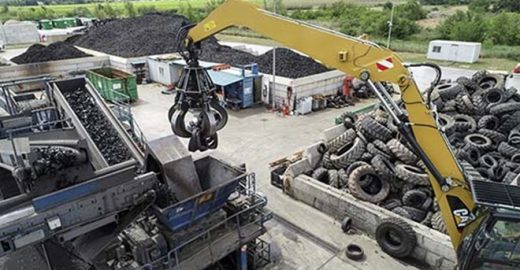
Aliapur – a French end-of-life tire management authority – recently announced a call for applications to participate in a tender to renew end-of-life tire collection and recycling contacts for 2021–2024..