Biomass pyrolysis unit has directly impacted Latin America carbon market by lowering the barrier to entry for biochar projects, enhancing carbon credit quality, and reshaping supply chain geography. The biomass pyrolysis carbonization plant itself is no longer merely a piece of biochar production equipment. It is a critical variable determining whether a carbon removal project can be successfully implemented and whether it can gain the trust of international buyers.
Pyrolysis equipment itself is evolving from traditional waste treatment machinery into a form of carbon removal infrastructure. The transformation process flows as follows: Biomass → Pyrolysis → Biochar → Durable Carbon Storage → Carbon Removal Credit → Carbon Market.
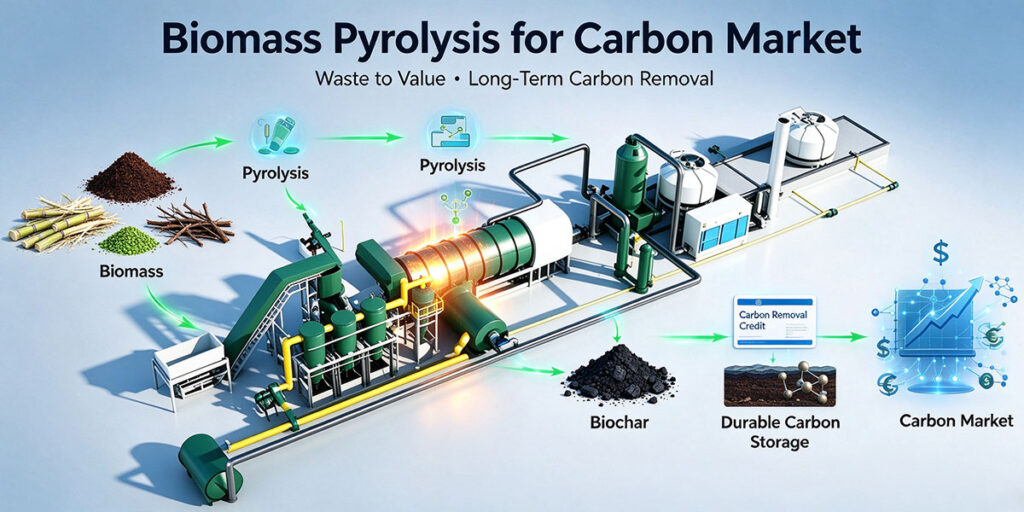
Provided that the biomass source, production process, end-use application, and MRV (Measurement, Reporting, and Verification) all comply with the requirements of the relevant carbon removal methodology, a portion of the stable carbon can generate certifiable carbon removal. A 2026 market report on biochar explicitly identifies biochar as one of the fastest-growing pathways for carbon dioxide removal (CDR).
The maturity of biochar technology has established it as a leading pathway for scalable carbon removal. Latin America—and Bolivia in particular—is emerging as a focal point of this trend. Corporate buyers favor long-term off-take agreements to secure guaranteed volumes of biochar carbon removal. This provides biochar project developers with financing certainty.
The Latin American biochar market is undergoing rapid expansion. While data from various research institutions differ in their underlying methodologies, they all point to a trend of robust growth.
One set of estimates places the Latin American biochar market size at $470 million in 2025, projecting an increase to $530 million in 2026 and reaching $1.49 billion by 2034. Another study indicates a market size of $320 million in 2024, with a compound annual growth rate (CAGR) of approximately 14.1% between 2025 and 2033.
As these estimates rely on different base years and statistical scopes, directly comparing their absolute figures is of limited utility. However, the consistent growth trajectory underscores a market currently in an upward phase, attracting widespread bullish sentiment from institutional investors.
Regarding technological pathways, biomass pyrolysis unit dominates biochar production in Latin America, driven by high yields and additional economic benefits.
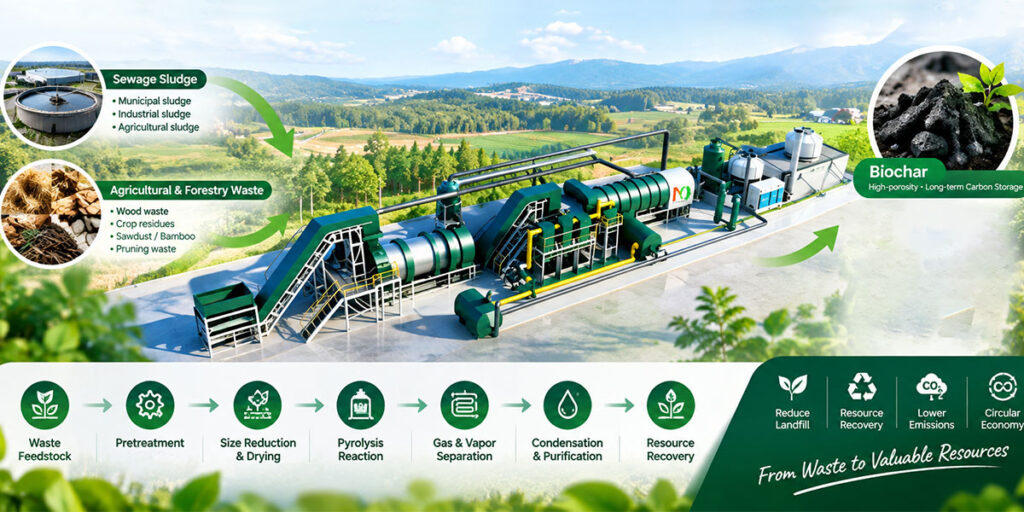
Brazil is currently considered to have the potential to establish a complete biochar value chain. Studies from 2026 indicate that Brazil generates approximately 967 million tons of agricultural and forestry residues annually. This provides a massive feedstock base for the biochar industry.
In terms of regional distribution, Brazil holds a central position, accounting for approximately 86% of biochar consumption and 87% of production in Latin America. This high level of concentration means that Brazil's domestic agricultural policies, energy demands, and carbon market dynamics directly shape the trajectory of the entire region.
Bolivia, Argentina, Colombia, and Mexico are emerging as new players, each participating in the biochar carbon removal market by leveraging unique feedstock endowments and application scenarios.
Industrial-scale biochar carbon dioxide removal (CDR) projects have already emerged in Argentina. One such project plans to process approximately 50,000 tons of biomass annually to produce about 10,000 tons of biochar. Targeting a carbon removal volume of roughly 21,000 tCO₂e per year, the project utilizes slow pyrolysis combined with waste heat recovery.
Colombia has seen the development of certifiable biochar carbon removal projects. Utilizing biochar methodologies, the country generated its first batch of 106 CORC 100+ carbon removal credits in 2026. Additionally, Colombia has been integrated into the Latin American Article 6 cooperation framework.
Bolivia is poised to become a new growth market for biochar. In 2026, the Bolivian company Empacar partnered with Bioflux, Cula, and Puro.earth to expand biochar production as part of its carbon removal and circular economy operations.
An Australian general waste and tire recycling authoritative body turned to Environment Minister Sussan Ley in November last year with a request to prohibit whole bale tire…
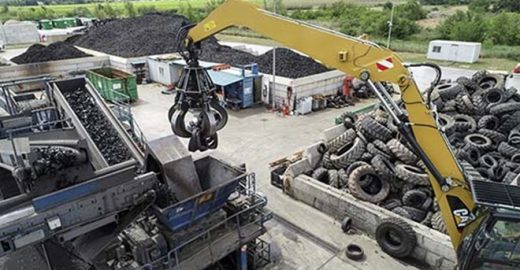
Aliapur – a French end-of-life tire management authority – recently announced a call for applications to participate in a tender to renew end-of-life tire collection and recycling contacts for 2021–2024..