Global waste tires create massive environmental challenges for modern cities and industrial sectors. Traditional disposal methods cause significant harm to our fragile ecosystems. Burned tires release toxic chemicals into the atmosphere and surrounding soil. Landfills cannot effectively manage these growing mountains of rubber waste. A waste rubber pyrolysis plant offers a modern solution to this crisis. This technology turns discarded scrap into valuable industrial resources.
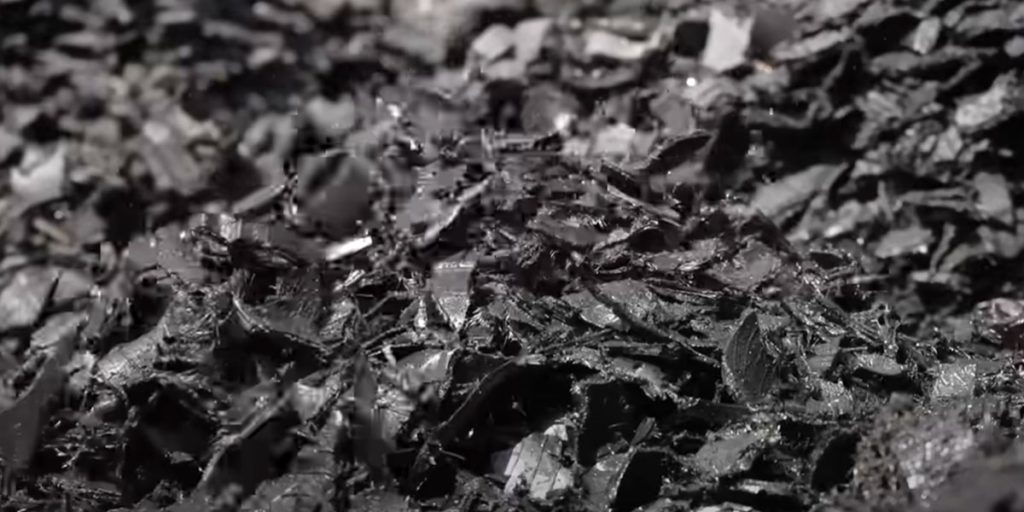
Investors profit while cleaning the planet with sustainable technology. A waste rubber pyrolysis plant creates renewable energy from solid waste materials. Mingjie Group helps industrial customers improve performance through advanced engineering. This sustainable alternative effectively handles the global waste rubber problem today. Our rubber pyrolysis plant turns environmental burdens into high-purity fuel oil. This process revitalizes local economies while protecting the Earth.
The pyrolysis plant operates through a thermal decomposition process. This chemical reaction occurs within a strictly low-oxygen environment. High temperatures inside the reactor break down the rubber molecules effectively. A rubber pyrolysis plant converts solid waste into several useful outputs. The system produces high-purity fuel oil and combustible syngas. It also generates solid residues carbon black.
Thermal decomposition avoids the production of harmful dioxins during operation. Direct incineration releases dangerous gases like nitrogen oxides and sulfur dioxide. The pyrolysis plant operates much more cleanly than traditional incineration. Our systems recover energy and value-added products with high efficiency. Modern engineering ensures the whole process remains safe and sustainable. The waste rubber pyrolysis plant promotes a cleaner industrial future.
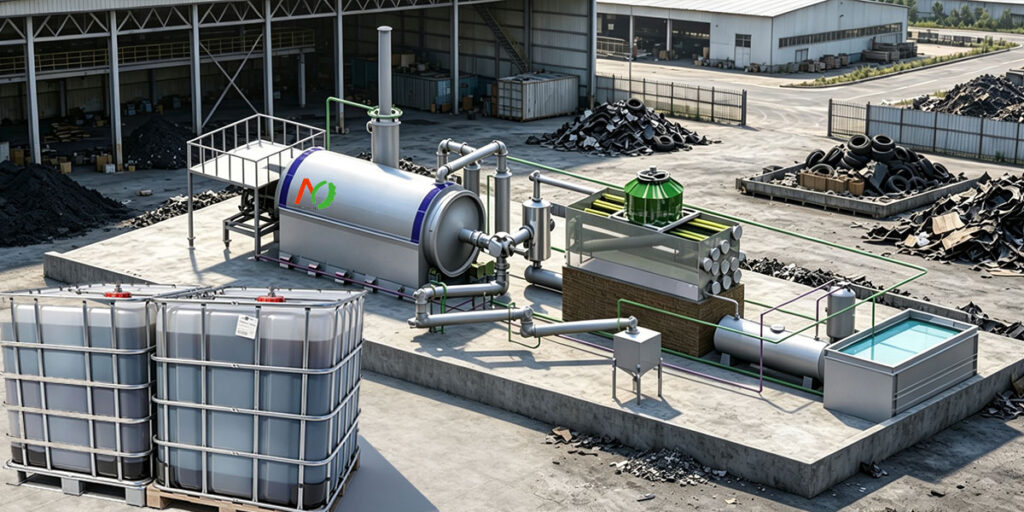
Rubber pyrolysis oil has a calorific value close to that of heavy oil. After distillation and refining, it can be used as a blending component for standard diesel/gasoline, suitable for the power needs of ships, agricultural machinery, and industrial generators. High-value applications of pyrolysis oil include its use as a petrochemical feedstock to produce olefins such as ethylene and propylene. It can also be used in the synthesis of plastics and rubber, achieving deep resource recycling.
Pyrolysis carbon black, after further processing, can be returned to tire manufacturing and rubber hose production. It can also be used as a colorant in coatings, inks, plastics, and rubber-plastic products. After purification and modification, pyrolysis carbon black can also be used as a conductive filler for lithium batteries and a raw material for the preparation of activated carbon.
Combustible syngas has a high calorific value and can be directly fed back to the combustion chamber of the pyrolysis equipment for heating, achieving fuel self-sufficiency for the plant. It can also be used for heat and power generation.
Mingjie Group offers several waste rubber pyrolysis plant models for waste pyrolysis projects.
The Batch Pyrolysis Plant suits small-scale or medium-scale production needs. This model processes 2 to 15 tons of waste every day. Operators reload the reactor after each batch finishes its cycle. A fully automatic rubber pyrolysis plant handles much larger waste volumes. This advanced system processes 35 to 40 tons of tires daily.
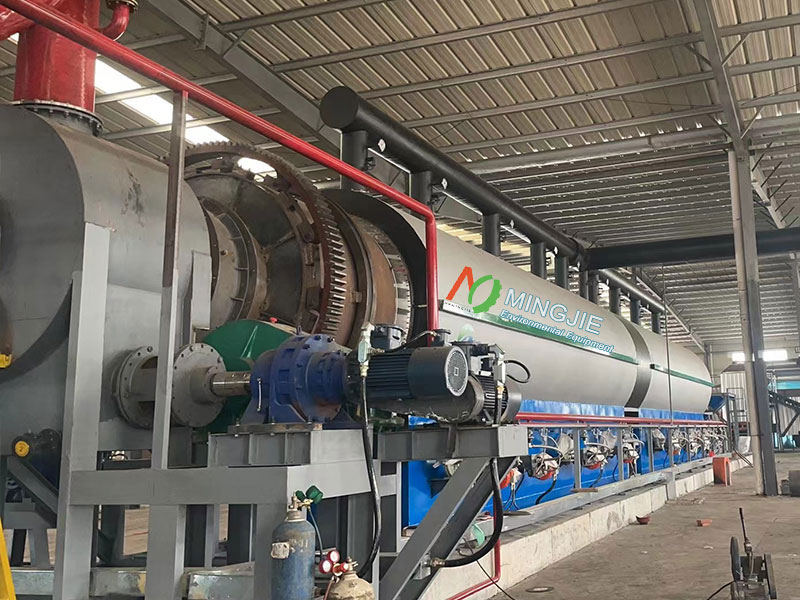
The automatic system supports fully continuous feeding and discharging for 24 hours. Continuous pyrolysis systems require raw material preparation before the process begins. Operators must shred tires into granules measuring between 5 and 8 millimeters. They also remove steel wires to protect the automatic feeding system. The sealed design of the rubber pyrolysis plant prevents fly ash. Every rubber pyrolysis plant model ensures a clean work environment.
Modern systems use water-cooled automatic slag discharge technology for efficiency. This allows for high-temperature discharging without waiting for reactor cooling. Semi-continuous models also process 15 to 16 tons of tires every day. Choosing the right pyrolysis plant depends on your specific capacity needs. Both systems deliver high efficiency and excellent product purity for users. Our waste rubber pyrolysis plant helps you achieve your recycling goals.
Henan Mingjie Environmental Protection Equipment Co., Ltd. leads the global industry. They manufacture every pyrolysis plant with extreme technical precision. The company operates a CNC workshop spanning 12,000 square meters. Production masters bring over 20 years of equipment manufacturing experience. Each waste rubber pyrolysis plant carries CE and ISO certification. Mingjie Group has served more than 200 global customers.
They successfully implement projects in over 30 different countries worldwide. The company provides customized solutions for tire and plastic recycling. They win trust with high-quality after-sales service and cost-effectiveness. A Mingjie pyrolysis plant represents global technical leadership. They continuously promote technological innovation through a dedicated research team. This expertise ensures your pyrolysis plant operates flawlessly for years.
The world needs effective solutions for rubber waste management. A rubber pyrolysis plant turns environmental burdens into valuable assets. It provides renewable energy while protecting our precious natural resources. Adopting this advanced technology solves local pollution problems immediately. The waste rubber pyrolysis plant represents the future of global recycling technology. Join the green revolution with proven industrial pyrolysis solutions.
Investing in a waste rubber pyrolysis plant offers high financial returns. The sale of pyrolysis oil and biochar creates steady income. These systems significantly reduce CO2 emissions compared to burning scrap tires. The rubber pyrolysis plant promotes the circular economy model. It converts useless scrap into high-value energy and materials.
An Australian general waste and tire recycling authoritative body turned to Environment Minister Sussan Ley in November last year with a request to prohibit whole bale tire…
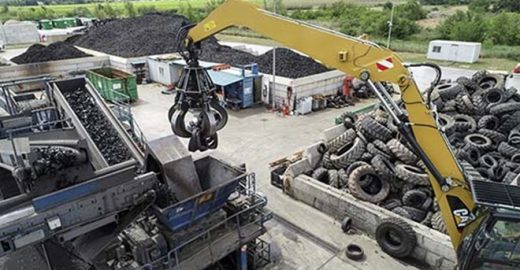
Aliapur – a French end-of-life tire management authority – recently announced a call for applications to participate in a tender to renew end-of-life tire collection and recycling contacts for 2021–2024..