The credibility of biochar carbon credits hinges on the biomass full lifecycle. Fundamentally, these are credits based on projections rather than measured emission reductions. While the credits are issued at the time of biochar production, the fulfillment of the carbon removal promise spans centuries. This "issue-first, verify-later" structure necessitates rigorous control across the entire supply chain to uphold the system's credibility.
The formula for calculating biochar Carbon Dioxide Removal (CDR)
Net Removal = Sequestered Amount – Feedstock Emissions – Production Emissions – Usage Emissions
A quality control chain spanning the entire industry value chain forms the core certification logic for leading biochar carbon removal standards (such as Verra VM0044, Puro.earth, and Global Artisan C-Sink). Each stage is a prerequisite for generating tradable biochar carbon credits. Any data inaccuracy at any point in the lifecycle directly inflates or deflates the final tonnage of credits issued.
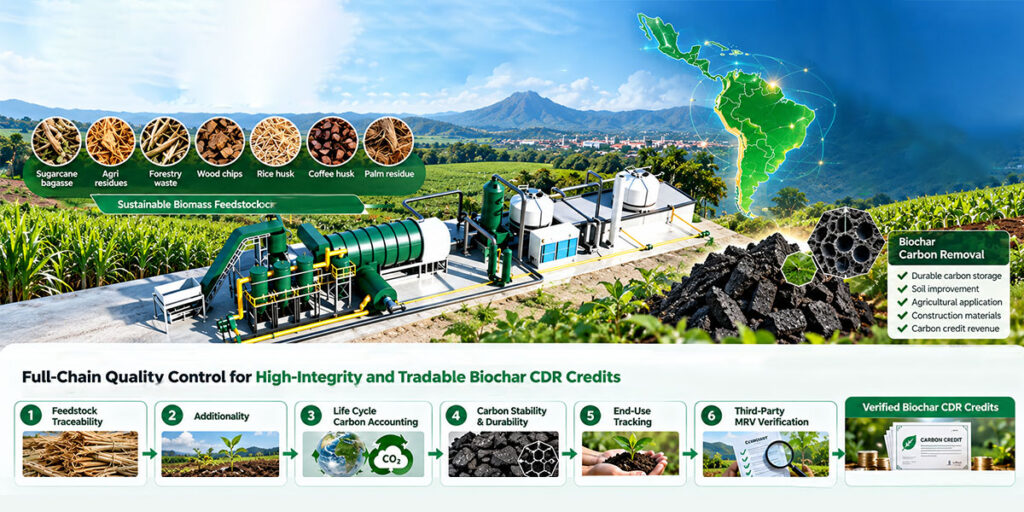
Without clear feedstock sourcing, a carbon balance cannot be established. Verra VM0044 v1.2 explicitly requires projects to demonstrate that the biomass used qualifies as Waste Biomass and mandates the disclosure of upstream land-use conditions.
The Puro.earth 2025 methodology further tightens biomass sourcing standards, requiring proof of legal harvesting or processing. Furthermore, documentation must align with the declared quantity of residues; this is not merely a matter of formal compliance.
If the feedstock originates from biomass that would otherwise have been incinerated or naturally decomposed, the calculation of baseline emissions changes fundamentally.
The core question regarding additionality is: Would this project proceed without carbon finance? VM0044 v1.2 introduces an investment analysis step to substantiate additionality. This requires project developers to demonstrate that the project is not financially viable based solely on revenue from biochar product sales or energy generation.
This step is critical because biochar projects often involve multiple revenue streams (products, energy, and carbon credits); if carbon credits serve merely as an added bonus, the argument for additionality will fail.
Life Cycle Assessment (LCA) encompasses the entire process, from feedstock collection and transportation to biomass pyrolysis energy consumption and biochar application. A 2025 U.S. Department of Energy document on BiCRS LCA best practices highlights that robust LCA is fundamental to evaluating the climate benefits of Carbon Dioxide Removal (CDR) and tracking technological progress.
Within MRV protocols, variations in LCA methodology—specifically regarding baseline setting and the handling of multifunctionality—directly impact the volume of credits ultimately issued. Simply put, underestimating transportation emissions or pyrolysis energy consumption leads to an overestimation of net carbon removal.
Biochar durability is primarily quantified using the H/C molar ratio. An H/C ratio of <0.40 indicates a highly aromatic product of high-temperature (>500°C) pyrolysis, containing a persistent carbon fraction (PAC) capable of remaining stable in soil for millennia. An H/C ratio of <0.70 corresponds to a Stable rating. Puro.earth has upgraded its durability guarantee from CORC100+ to CORC200+.
However, the H/C ratio is not a perfect indicator. Transitional materials resulting from low-temperature or incomplete pyrolysis may be masked by the H/C ratio, necessitating verification through additional methods such as thermogravimetric analysis (R50).
The fate of biochar following application determines whether carbon is truly sequestered. Under the October 2025 rule update, the Global Artisan C-Sink standard allows biochar mixed with approved substrates (such as compost or manure) to be registered as a diffuse C-sink, eliminating the requirement to track the material to the specific final field of application. This is permitted provided the substrate itself possesses "oxidation-resistant" properties.
For instance, when biochar is mixed with compost at a ratio of 1:1 or higher, the risk of spontaneous combustion or decomposition can be effectively ruled out. Geospatial tracking remains mandatory for the direct application, landfilling, or geological sequestration of pure biochar.
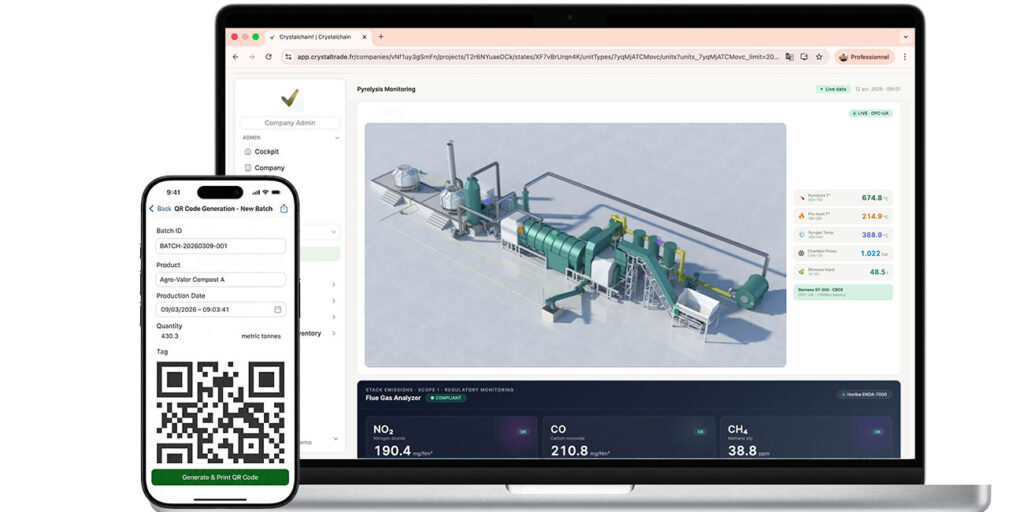
MRV is not merely an audit but an independent verification of all the aforementioned stages. A typical verification involves cross-referencing data points: weighbridge data against logbooks and emission reduction spreadsheets; biochar output against distribution and application records; moisture logs against adjusted dry weight; and laboratory reports against declared H:C ratios.
The BioCarbon Standard MRV framework also requires the quantification of uncertainty and mandates a deduction in the volume of issued credits if total uncertainty exceeds a specific threshold. This means that even if a project appears compliant, the final tradable tonnage will be reduced if the data chain contains unquantifiable uncertainties.
Mingjie biochar production equipment features stable operational performance and comprehensive dMRV capabilities, laying a solid technical foundation for the rapid deployment of biochar carbon removal projects.
The essence of this end-to-end quality control chain is that every stage serves as a prerequisite for the tradability of carbon credits, rather than merely an ex-post check. Only when all stages are successfully validated can the resulting biochar CDR credits qualify for entry into compliance or voluntary carbon markets.
An Australian general waste and tire recycling authoritative body turned to Environment Minister Sussan Ley in November last year with a request to prohibit whole bale tire…
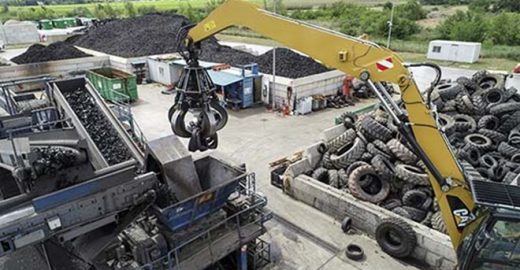
Aliapur – a French end-of-life tire management authority – recently announced a call for applications to participate in a tender to renew end-of-life tire collection and recycling contacts for 2021–2024..