Grass is a herbaceous feedstock characterized by high volatile content, high alkali metal (K/Na) levels, high chlorine content, and a relatively low ash fusion temperature. The conversion of grass into biochar differs significantly from the carbonization of wood chips or hardwood.
Moisture Content Control: It is recommended to keep the moisture content of the grass below 15%. Excessive moisture absorbs significant heat, destabilizes furnace temperatures, reduces biochar yield, and leads to a sharp increase in tar production. Conversely, moisture levels that are too low result in excessive fine particles, increasing risks related to dust, static electricity, and deflagration.
Impurity Removal and Screening: Strictly remove soil, sand, stones, and metallic impurities. Soil and grit accelerate the wear of components such as rotary drums, screw conveyors, and cyclone separators. Furthermore, the presence of soil increases the ash content of the final product.
Shredding/Homogenization: Grass is bulky and has a very low bulk density, which can hinder continuous feeding. It is advisable to shred the grass into 2–5 cm pieces; if possible, briquetting or pre-forming the material will help ensure a consistent and uniform feed rate.
Feedstock Quality Inspection: Test for chlorine (Cl), potassium (K), sodium (Na), and heavy metals. In grass, Cl and K are the primary drivers of high-temperature corrosion, slagging, and coking.
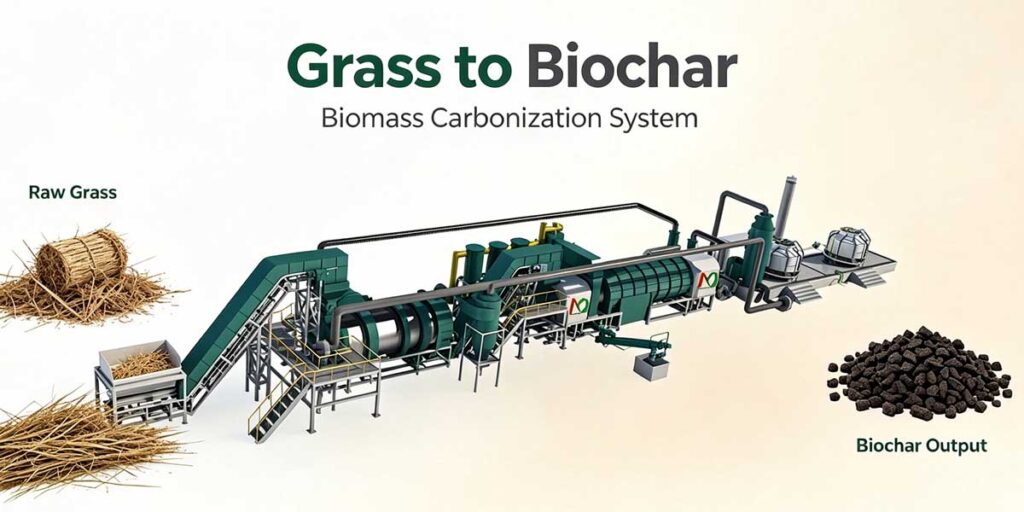
Oxygen content inside the kiln must be kept below 5%, the conversion of grass into biochar process requires oxygen-free or oxygen-depleted slow pyrolysis. If oxygen levels exceed this limit, the volatile components in herbaceous biomass can easily ignite or explode, leading to significant carbon loss, a sharp drop in charcoal yield, and the generation of large quantities of CO. The biomass carbonization system must be maintained under slight negative pressure to prevent flue gas leakage and the ingress of ambient air.
For agricultural biochar production, the typical temperature range is 400–600°C. Temperatures above 600°C trigger the release of alkali metals and chlorine, which significantly accelerates corrosion. Temperatures below 400°C result in unstable biochar with high polycyclic aromatic hydrocarbon (PAH) content, making it difficult to obtain EBC (European Biochar Certificate) certification.
Since herbaceous biomass releases volatiles rapidly, the heating rate must be carefully controlled. This prevents a sudden surge in volatile gases, which could otherwise cause tar-related clogging in the piping and pressure fluctuations.
Herbaceous biomass has a high content of cellulose and hemicellulose, leading to a faster pyrolysis rate compared to wood. The rotational speed and inclination angle of the rotary kiln must be specifically calibrated to avoid over-carbonization or incomplete pyrolysis.
The pyrolysis of herbaceous biomass generates significantly more tar than wood-based feedstocks. This tar tends to condense and accumulate, causing blockages in heat exchangers and pipelines. The grass carbonization plant should incorporate processes such as rapid cooling, oil removal, water scrubbing, and electrostatic tar precipitation. Additionally, the combustible gases generated can be recovered to provide heat for the carbonization system, thereby improving overall thermal efficiency.
At temperatures above 550°C, potassium, sodium, and chlorine are released in significant quantities, forming chlorides. This leads to high-temperature chloride corrosion in the downstream flue, heat exchangers, and induced-draft fans. Furthermore, ash deposits on tube walls can melt and form slag, which, over time, may cause perforations and necessitate operational shutdowns.
Recommendations
Combustible Gas Risks: High volatile content leads to significant gas generation, with high concentrations of CO, H₂, and methane. The entire system must be equipped with CO and combustible gas detectors, an inert gas (nitrogen) purging/protection system, and explosion-venting panels. Purging and displacement of gases are mandatory prior to any maintenance.
High-Temperature Char Discharge Risks: Hot char exiting the reactor is highly prone to re-ignition upon contact with air. A sealed, water-cooled system or an isolated cooling chamber is required; the char must be cooled to below 60°C before discharge and packaging.
Dust Explosion Prevention: Hay-based feedstock and finished char powder are classified as combustible dust. Dust collection systems must be designed in compliance with relevant dust explosion prevention standards.
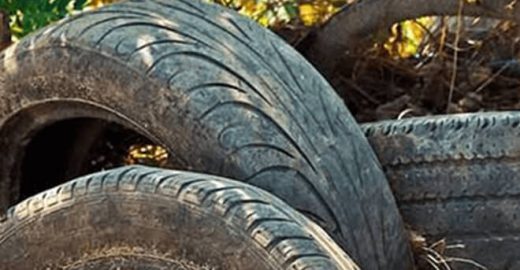
An Australian general waste and tire recycling authoritative body turned to Environment Minister Sussan Ley in November last year with a request to prohibit whole bale tire…
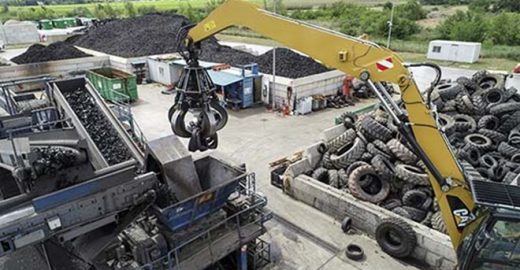
Aliapur – a French end-of-life tire management authority – recently announced a call for applications to participate in a tender to renew end-of-life tire collection and recycling contacts for 2021–2024..