Mingjie Biomass Carbonization Plant provides a green industrialization path for durian shell disposal. Through pyrolysis carbonization technology, durian shells can be converted into high-value-added biochar materials. We have skid-mounted biomass pyrolysis equipment for experimental use, and continuous biomass carbonization equipment is specifically designed for large-scale production of durian shell biochar.
The continuous durian shell biochar production line consists of five core processes, equipped with integrated automated equipment.
Raw Material Crushing and Drying Process
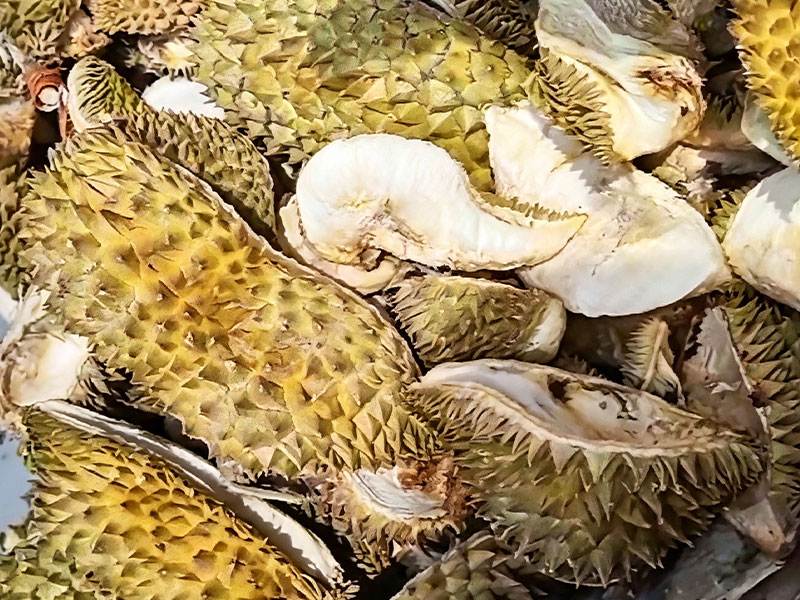
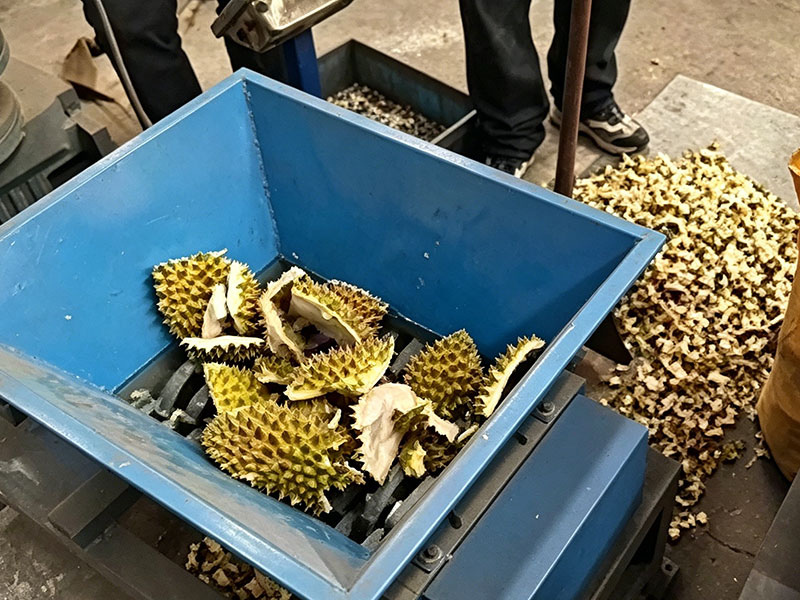
Waste durian shells are large in size, and directly feeding them into the furnace would cause uneven heating and feed blockage. First, the durian shells are fed into a crusher and pulverized into pieces smaller than 2cm.
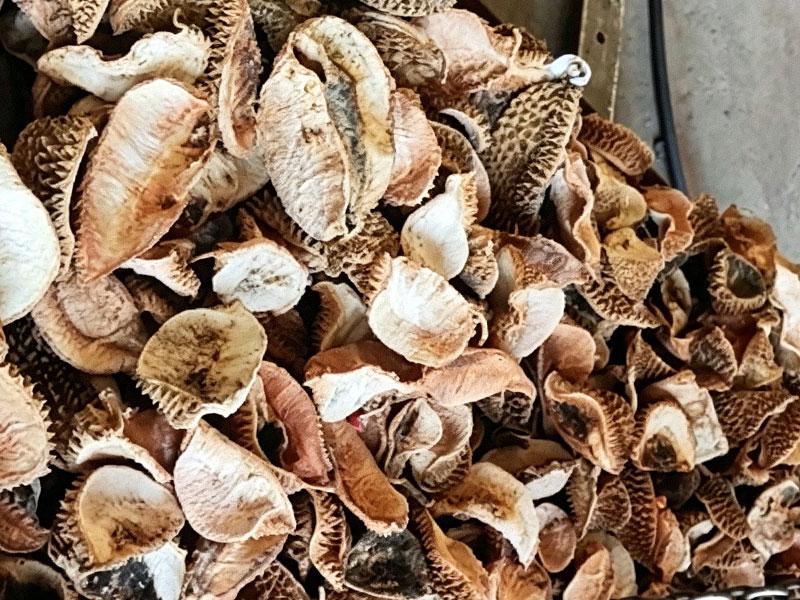
Fresh durian shells have a high moisture content of 45%~60%. Direct pyrolysis would significantly increase furnace energy consumption, and the moisture would also damage the porous structure of the durian shell biochar. The drying system reduces the moisture content of the shells to below 15%.
Continuous Pyrolysis Carbonization
Dried durian shells are fed into the rotary carbonization unit via a sealed screw feeder. The carbonization equipment maintains a nitrogen-based inert, oxygen-free atmosphere to prevent charcoal combustion loss. The pyrolysis reactor employs a low-speed rotation design, ensuring uniform heating of the shells. The holding time is adjustable from 40 to 90 minutes, allowing for flexible temperature parameter adjustments based on product application.
Biochar Cooling and Collection
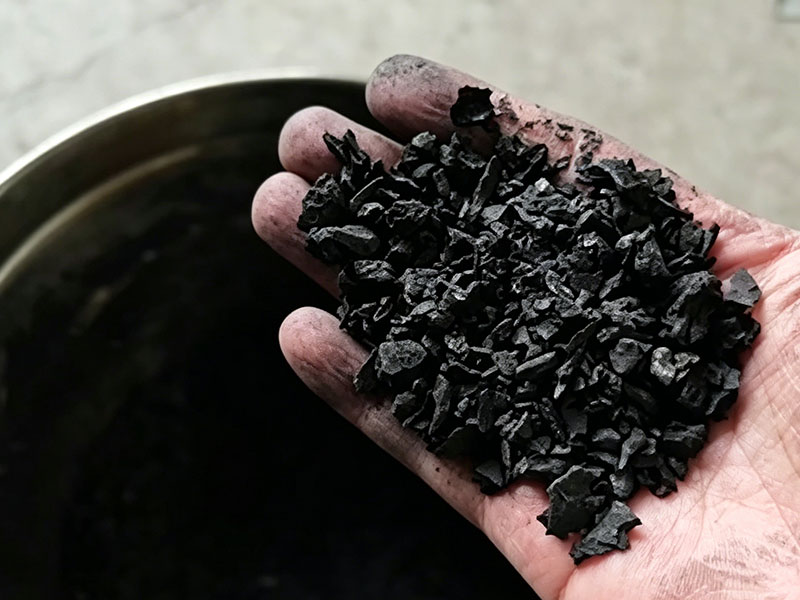
The high-temperature carbonization discharge temperature exceeds 400℃, which will cause violent spontaneous combustion upon direct contact with air. The pyrolysis-processed durian shell biochar is conveyed via a water-cooled screw conveyor and can be directly bagged for storage. The produced durian shell biochar is in block/granular form; if powdered char is required, grinding and screening equipment can be used.
Tail Gas Purification and Waste Heat Recovery System
The syngas generated during the biomass pyrolysis process is collected uniformly. A portion is recovered and used as fuel for the carbonization main unit for circulating heating, significantly reducing external coal and gas consumption. The remaining waste gas is purified through spray dust removal and desulfurization before being discharged in compliance with standards. It meets industrial environmental emission standards, truly achieving internal energy recycling.
The key equipment for large scale biochar production is the continuous carbonization furnace. Compared with traditional earthen kilns or intermittent carbonization furnaces, it has significant advantages.
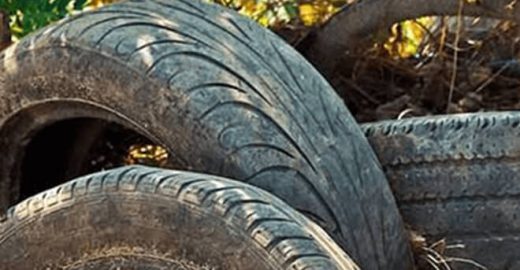
An Australian general waste and tire recycling authoritative body turned to Environment Minister Sussan Ley in November last year with a request to prohibit whole bale tire…
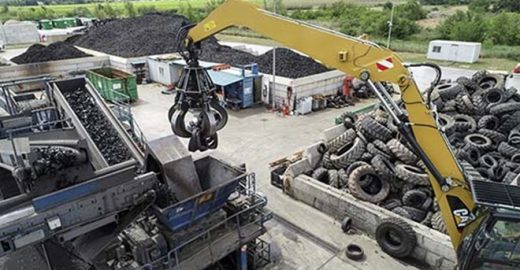
Aliapur – a French end-of-life tire management authority – recently announced a call for applications to participate in a tender to renew end-of-life tire collection and recycling contacts for 2021–2024..