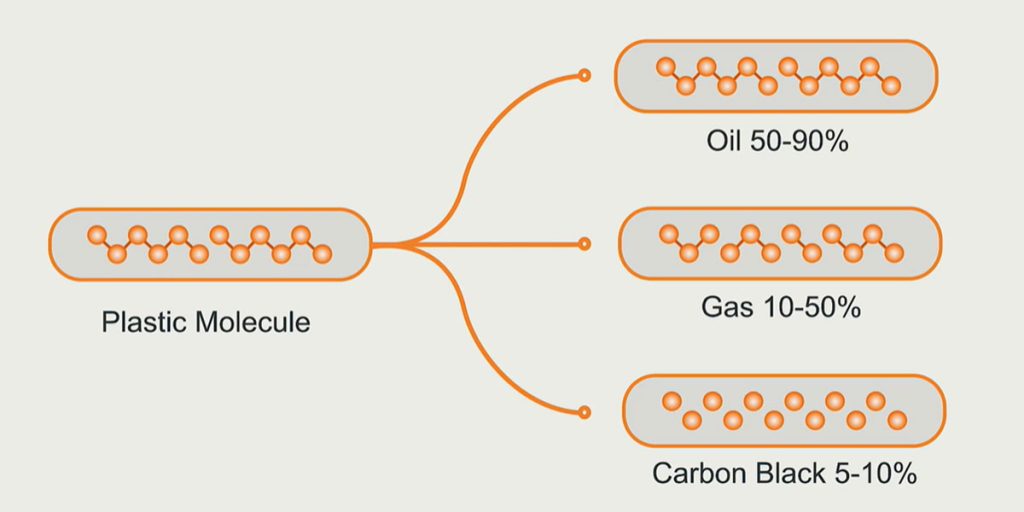
Global waste plastic governance has officially entered a new phase characterized by strong regulation, high recycling rates, and resource-based upgrades. The UN Global Plastics Treaty has been implemented, and national regulations on plastic restrictions and recycled resources are being updated intensively. Traditional mechanical recycling can no longer meet the global demand for plastic recycling. Plastic pyrolysis recycling, as an advanced chemical recycling technology, achieves high-level recycling of waste plastics. It can convert low-value waste plastics into resource-based products pyrolysis oil, carbon black, and syngas.
Pyrolysis technology, as a core and mature process of chemical recycling, has become a key alternative technology supported by global policies. Differentiated waste plastic recycling policies in various countries are reshaping the industrialization pace of the continuous pyrolysis industry and promoting the deep processing and application of plastic pyrolysis products.
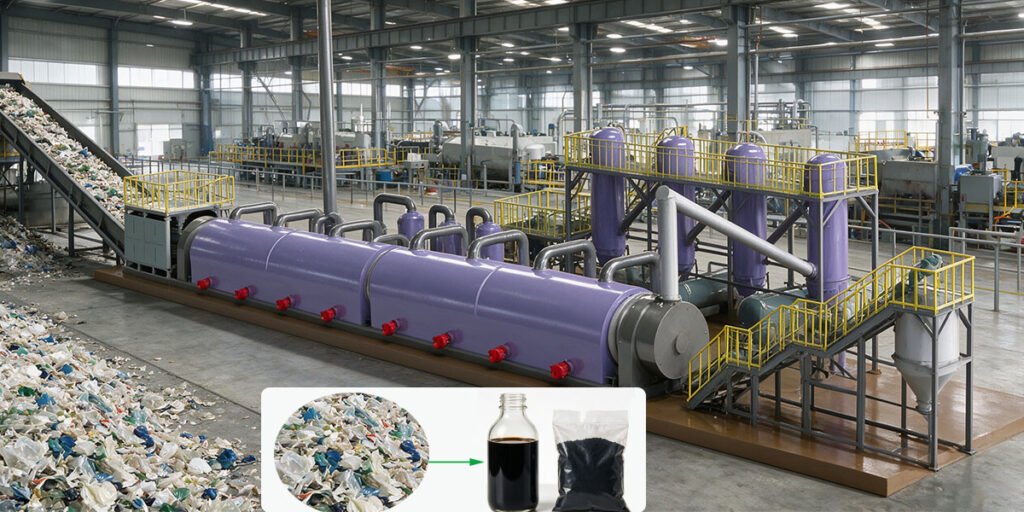
Currently, global plastic recycling policies exhibit significant regional differentiation but unified objectives, with a core focus on increasing plastic recycling rates, strictly controlling plastic pollution, and building a full life-cycle plastic recycling system. The UN Environment Programme-led Global Plastics Treaty explicitly incorporates chemical recycling into the plastic recycling system and recognizes pyrolysis technology as an important supplement to mechanical recycling. This lays the top-level policy foundation for the development of the global pyrolysis industry.
Within this framework, major economies have introduced detailed implementation policies. The EU emphasizes high-standard mandatory recycling and traceability accounting. The US implements state-level differentiated regulations. China promotes standardized and energy-efficient industry access. Japan and South Korea focus on the refined resource utilization of high-risk waste plastics.
The EU has included plastic pyrolysis within the scope of advanced chemical recycling, recognizing the compliant status of pyrolysis products as secondary raw materials. It allows the calculation of recycled content using the conservation of mass method and its inclusion in statutory recycling indicators, thus completely resolving the compliance challenges of plastic pyrolysis recycling.
The mandatory recycled plastic content law, which officially came into effect in August 2026, requires all member states to incorporate a specified proportion of recycled materials into their plastic packaging. This has spurred a large-scale market demand for pyrolysis recycled products, which traditional physical recycling alone cannot fully meet.
Regulations require compliance certification and record-keeping at every stage of the entire waste plastic pyrolysis recycling industry chain, from waste plastic pretreatment and pyrolysis production to end-product applications. This promotes standardized and regulated production in the waste plastic pyrolysis recycling industry.
Furthermore, the EU's Carbon Border Adjustment Mechanism (CBAM) provides strong low-carbon incentives. Data shows that when the carbon price reaches $100/ton, the net profit from polyethylene pyrolysis to fuel oil is more than four times higher than that from traditional incineration. Policy incentives have driven the EU's pyrolysis recycling capacity to grow at an average annual rate of 27%.
Meanwhile, the EU's strict landfill bans and high landfill taxes have significantly reduced the intensive landfill and incineration methods for waste plastics, creating an excellent market environment for alternatives such as pyrolysis recycling.
Based on policies such as the Dual Carbon target, the special action plan for plastic pollution control, and the circular economy development plan, the state has explicitly supported the industrialization of chemical recycling technology for waste plastics. It has included plastic pyrolysis in the environmental protection-encouraged industry catalog, providing policy support for project approval, land use, and energy consumption approval.
The industry standard "Technical Specifications for Chemical Recycling of Waste Plastics" clearly defined core quality indicators for pyrolysis plastic products, such as sulfur content, cetane number, and purity, filling the gap of a unified standard in the domestic waste pyrolysis recycling industry.
Meanwhile, the comprehensive implementation of the import ban on waste plastics in China has completely blocked the import of low-end waste plastics. This has prompted the upgrading of the domestic plastic recycling system and driven enterprises to shift towards high-end recycling technologies such as pyrolysis.
The United States employs a state-level, tiered regulatory model, lacking a unified legal framework for plastic pyrolysis recycling. The Environmental Protection Agency (EPA) classifies plastic pyrolysis as an advanced recycling technology, granting it certain low-carbon certifications and policy support. However, recycling quotas, compliance standards, and subsidy policies vary significantly across states. This greatly impacts industry investment confidence, resulting in slow project implementation and limited capacity expansion in the US pyrolysis recycling sector.
Emerging markets such as India and Southeast Asia are in a policy catch-up phase. The core focus is on strengthening EPR (Enhanced Product Recycling Requirements), mandating that manufacturers assume responsibility for waste plastic disposal. However, these regions generally suffer from inadequate supporting policies, a lack of industry standards, and weak infrastructure. While the waste plastic pyrolysis recycling market has enormous potential, standardized development is unlikely in the short term.
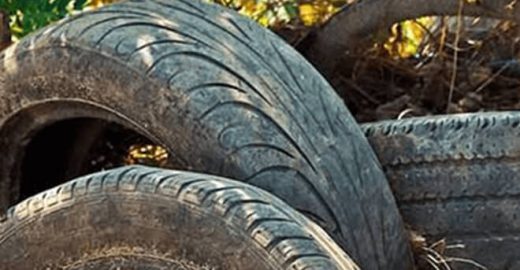
An Australian general waste and tire recycling authoritative body turned to Environment Minister Sussan Ley in November last year with a request to prohibit whole bale tire…
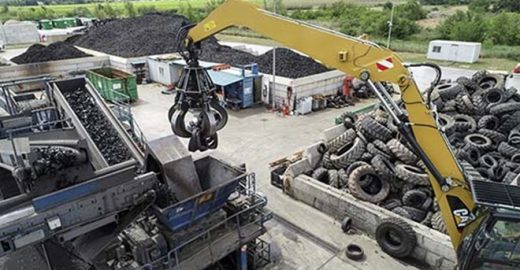
Aliapur – a French end-of-life tire management authority – recently announced a call for applications to participate in a tender to renew end-of-life tire collection and recycling contacts for 2021–2024..