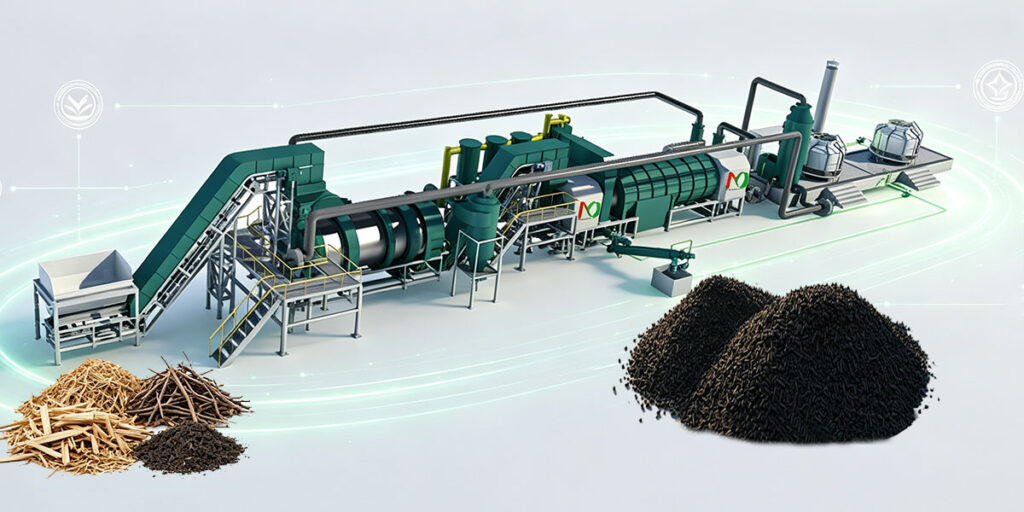
As the global carbon neutrality process accelerates, biochar, as a material with both carbon sequestration and soil improvement capabilities, is receiving increasing attention. However, not all biochar can gain market and carbon trading platform approval. Fully automatic biomass pyrolysis plant provides the technological foundation for the large-scale, homogenized production of biochar. The stability and traceability of this process are precisely the core prerequisites for biochar to obtain international certification.
With the rapid development of circular agriculture and negative carbon technology markets, biochar is no longer simply a carbonized product of agricultural and forestry waste. For the EU and international carbon trading markets, EBC European Biochar Certification and ISCC Sustainable Certification have become core access credentials for biochar to enter overseas markets and obtain carbon credits.
Fully automatic biomass pyrolysis plant delivers the process feasibility for biochar to obtain EBC and ISCC certifications. Stable closed‑loop automatic operation ensures consistent biochar quality, full‑process traceability and compliant by‑product utilization, meeting strict audit requirements from EBC and ISCC.
EBC focuses on the safety and quality of the finished biochar product: It strictly limits the levels of harmful substances such as polycyclic aromatic hydrocarbons (PAHs) and heavy metals, requiring anaerobic/oxygen-deficient carbonization during pyrolysis and prohibiting open combustion. It also requires reproducible production processes, stable batch-to-batch performance, and support for annual on-site audits.
ISCC focuses on the sustainability of the entire supply chain: It requires raw materials to be sustainable biomass such as agricultural and forestry waste, and establishes a complete raw material traceability ledger. Greenhouse gas emissions during production must be measurable, all byproducts must be compliantly recycled, and material flow and production data must be fully recorded.
The continuous biomass pyrolysis plant offers automated, closed-loop production, controllable parameters, and data retention. This provides crucial feasibility support for biochar to successfully obtain EBC and ISCC certifications.
The entire fully automatic continuous pyrolysis plant operates in a completely closed loop, isolating the feed, pyrolysis, and char output processes from air exposure. It relies on an automated system to lock in key parameters such as pyrolysis temperature, material residence time, and oxygen content within the furnace.
A stable, anaerobic carbonization environment suppresses PAHs formation at the source of the process. This ensures that the fixed carbon and hazardous substance levels of the produced biochar remain consistently within EBC standard thresholds.
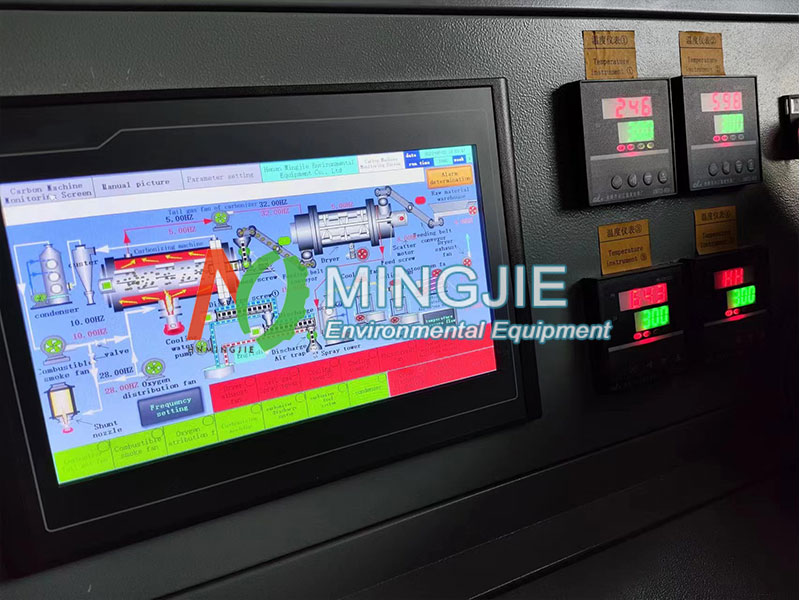
The fully automatic pyrolysis system automatically collects and stores the entire production line's operational logs. Data such as raw material feed rate, pyrolysis temperature, discharge rate, and by-product output are archived long-term.
During EBC on-site audits and ISCC supply chain audits, the corresponding batch production records can be directly retrieved. This achieves complete traceability of the entire "raw material - production status - finished biochar" chain.
The factory is equipped with automated feeding and pre-processing units that can handle agricultural and forestry waste raw materials such as straw and sawdust. This facilitates the establishment of digital ledgers for raw material warehousing, consumption, and output. It can completely record the source and batch information of waste. This meets ISCC's requirements for the sustainability of biomass raw materials and the prohibition of traceability of virgin wood.
The fully automatic biochar production line recovers combustible gas from pyrolysis for factory heating and produces biochar in a targeted manner. The flow of all products is statistically tracked, providing a reliable process data foundation for ISCC full life-cycle carbon footprint accounting and carbon credit development.
The global biochar standardization system is gradually moving towards convergence and harmonization. Biochar standards primarily comprise internationally recognized standards, regional standards, national standards, and carbon…
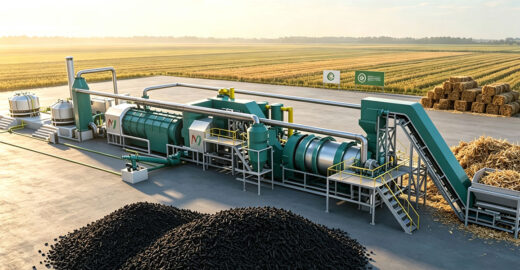
Discover why a biomass carbonization plant is safer than incineration. Learn how to reduce emissions and produce high-value biochar through sustainable technology.