Carbon black is the most important reinforcing filler in tire manufacturing. Globally, the annual production of virgin carbon black, amounting to tens of millions of tons, heavily relies on coal tar and petroleum-based fossil fuels, with significant carbon emissions during the production process. Driven by both global carbon neutrality goals and the circular economy trend, sustainable carbon black has become a core tool for the tire industry to achieve a closed-loop "tire-to-tire" production chain.
2026 is widely recognized by the industry as a turning point for the commercialization of sustainable carbon black, with a clear industry differentiation pattern emerging. Sustainable carbon black has evolved into two main routes originating from the pyrolysis of waste tires: recovered carbon black (rCB) and furnace-processed carbon black (sCB). These two are not competing or replacing each other, but rather complementary, jointly driving the global carbon black industry from fossil-based to circular economy.
Sustainable carbon black not only provides a high-value outlet for black pollution waste tires but also becomes a key breakthrough for the low-carbon transformation of the global tire and rubber industry chain.
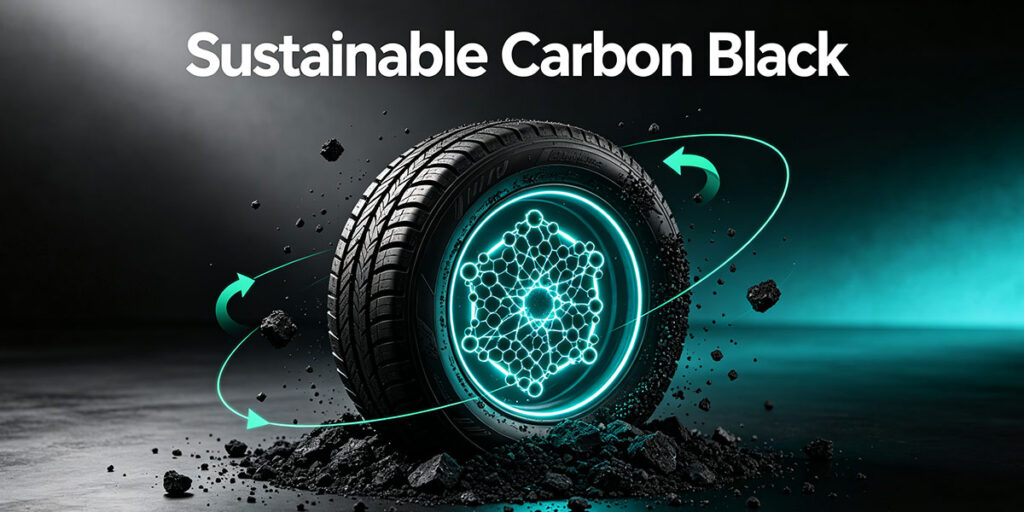
Sustainable carbon black generally refers to recycled carbon black produced from waste resources, significantly reducing its carbon footprint compared to traditional carbon black. Its performance is comparable to that of recycled carbon black used in the rubber and tire industries. Currently, the main industrial applications come from the pyrolysis of waste tires, and it falls into two main technological branches:
The solid residue after the waste tires pyrolysis retains the original carbon black particles. It requires post-processing such as impurity removal, deashing, grinding and activation, and granulation to obtain the recycled carbon black product. rCB recycled carbon black uses a direct solid recovery method.
The production process of recycled carbon black (rCB) mainly consists of two stages: pyrolysis and upgrading. The pyrolysis plant is the core equipment for converting waste tires into crude carbon black. Upgrading is crucial in determining whether it can be used in high-end applications.
Waste tires produce crude rCB through batch/continuous pyrolysis plants. Pyrolysis is the foundation of rCB production. It involves heating waste tires to high temperatures under anaerobic or limited oxygen conditions, causing the rubber and other polymers to decompose into pyrolysis gas, pyrolysis oil, and solid carbon black.
To make the performance of rCB approach or even reach that of commercial carbon black, post-processing and upgrading are necessary. Crude rCB undergoes further upgrading processes such as magnetic separation to remove iron, grinding and dissociation, deashing, surface activation, and granulation to produce industrial-grade/tire-grade rCB.
sCB is carbon black produced using a furnace process that partially or completely replaces fossil fuels such as coal tar with tire pyrolysis oil (TPO). It is not simply a recycling of carbon black, but rather a further conversion of the organic components in waste tires into new carbon black raw materials.
Because sCB uses a mature furnace process, its physicochemical properties are highly consistent with traditional carbon black. It is more easily integrated into the high-standard formulation systems of international tire companies.
Pyrolysis oil is an ideal feedstock because it is rich in aromatics. However, the complex origins of tires result in significant fluctuations in its composition and high levels of impurities, which would severely impact carbon black quality if used directly. Therefore, the key to the process lies in the pretreatment of the pyrolysis oil and precise process control.
Pretreatment is an indispensable step in ensuring that the unstable pyrolysis oil meets industrial requirements. TPO is separated into light fuel oil and heavy feedstock oil through pyrolysis oil distillation plant. The heavy fraction is used to produce carbon black, while the light fraction can be used as fuel for the reactor. This achieves graded utilization of the feedstock.
An Australian general waste and tire recycling authoritative body turned to Environment Minister Sussan Ley in November last year with a request to prohibit whole bale tire…
Aliapur – a French end-of-life tire management authority – recently announced a call for applications to participate in a tender to renew end-of-life tire collection and recycling contacts for 2021–2024..