Global supply chains now shift toward emerging industrial markets. This expansion creates significant waste management challenges in developing regions. Local companies often use the Semi-continuous Pyrolysis Plant to solve these issues. Developing regions must manage tires and plastics to protect the environment. This shift demands efficient recycling solutions to support industrial growth. Mingjie Group offers technology to process materials without harming local ecosystems.
Trade shifts force medium-sized firms toward circular economy models. These companies must manage waste tires and plastics on a local scale. Mingjie Group helps firms reduce environmental impact through proven thermal technology. Investors seek high returns from waste-to-energy projects in these hubs. Modern systems turn solid waste into high-purity fuel oil. High oil yields from pure plastics maximize profitability for industrial customers. This strategy secures long-term value for growing enterprises in developing countries.

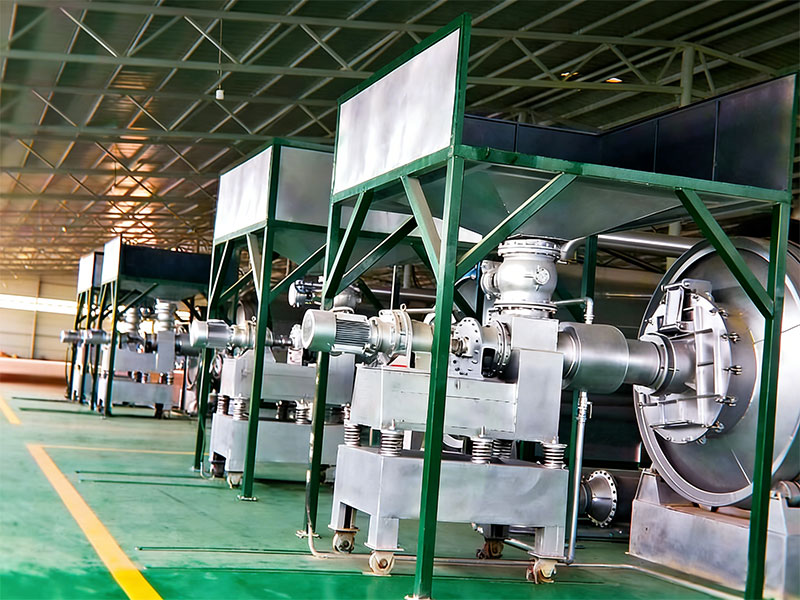
The Semi-continuous Pyrolysis Plant bridges the gap between batch and fully automatic units. It handles higher capacities than standard small-scale recycling machinery. This continuous Pyrolysis Plant processes 15 to 16 tons of tires daily. It also handles 12 tons of waste plastic materials every day. Operators must crush raw materials into rubber powder smaller than 5-8mm. Feedstock should exclude steel wire to ensure the best processing results. This model meets the production needs of expanding medium-scale industrial facilities.
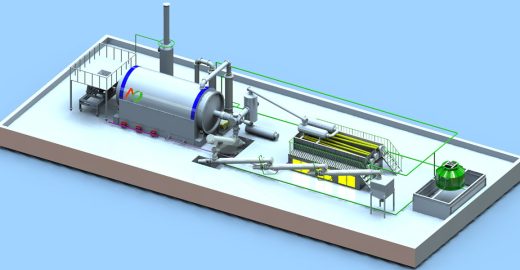
This Semi-continuous Pyrolysis Plant includes an automatic feeding system. Operators feed raw materials at high temperatures without waiting for furnace cooling. This feature improves efficiency by maintaining a steady workflow in the facility. The reactor reaches an optimal peak temperature of about 420 ℃. A water-cooled automatic slag discharge system prevents the release of fly ash. A fully enclosed process ensures a clean and professional operating environment. The continuous Pyrolysis Plant offers high cost-effectiveness for global industrial buyers.
The Semi Continuous Pyrolysis Plant converts waste tires into high-purity fuel oil. Pure PP and PE materials provide a high oil yield of 70-80%. The system also produces carbon black and syngas during thermal decomposition. Industrial boilers use the resulting fuel oil as a powerful heating source. Distillation units can further purify this oil into bright non-standard diesel. Heavy engines and ships run effectively on this light fraction diesel product. The continuous Pyrolysis Plant creates reliable resources for local secondary sales markets.
Thermal processing in an oxygen-deficient environment reduces greenhouse gas emissions. The Semi-continuous Pyrolysis Plant produces less dioxins, NOx, and SO2 than incineration. Unique flue gas treatment systems ensure the facility meets international environmental standards. Mingjie Group maintains ISO and CE certifications for its entire machinery lineup. This technology reduces the need for landfills in rapidly growing industrial cities. The continuous Pyrolysis Plant helps achieve a sustainable closed-loop recycling system. Clean operations support the long-term health of emerging urban ecosystems.
The Semi-continuous Pyrolysis Plant offers a balanced capital investment for firms. It provides better efficiency than batch units without the cost of full automation. Mingjie Group includes a 12-month guarantee to protect international investor capital. Reliable after-sales service builds trust in remote or emerging industrial zones. The continuous Pyrolysis Plant satisfies the capacity needs of medium industrial hubs. Experts provide customized solutions to more than 200 customers across 30 countries. High-quality machinery ensures high returns while solving critical waste management problems.
The Semi-continuous Pyrolysis Plant serves as a bridge for sustainable industrialization. Choosing proven machinery helps solve waste problems and generates profitable energy. Pyrolysis technology plays a central role in a green global future. Emerging markets benefit from converting waste tires into valuable industrial commodities. Sustainable development requires efficient processing and high resource recovery rates. Mingjie Group leads the way in advanced environmental protection technology.

Fully automatic pyrolysis plant is gradually becoming popular equipment in the field of waste treatment and resource recovery around the world. Pyrolysis technology can convert…
Market data shows that semi continuous pyrolysis plant holds a prominent share in the segmented market of waste tire pyrolysis equipment. According to relevant industry…