Polyolefin plastics (PP) and polyethylene (PE) are widely used in packaging films, daily-use plastic products, industrial parts, and agricultural films due to their low cost, good ductility, and stable physicochemical properties. However, waste PP and PE are difficult to biodegrade naturally, and traditional mechanical recycling can only produce low-grade recycled materials with poor market competitiveness. In recent years, increasingly stringent global carbon policies and regulations on plastic pollution control have driven the rapid development of chemical recycling technologies, such as Waste Plastic Pyrolysis to Oil.
Unlike the pyrolysis of mixed plastics, the pyrolysis of PP and PE waste offers significant technological advantages. The single polyolefin structure avoids complex cross-reaction interference, resulting in higher oil yields, more stable product quality, and lower post-refining costs. In 2026, continuous pyrolysis technology for PP and PE waste has achieved large-scale commercial landing. In the future, continuous waste plastic pyrolysis to oil plants will gradually become the mainstream solution for recycling high-value waste PP and PE.
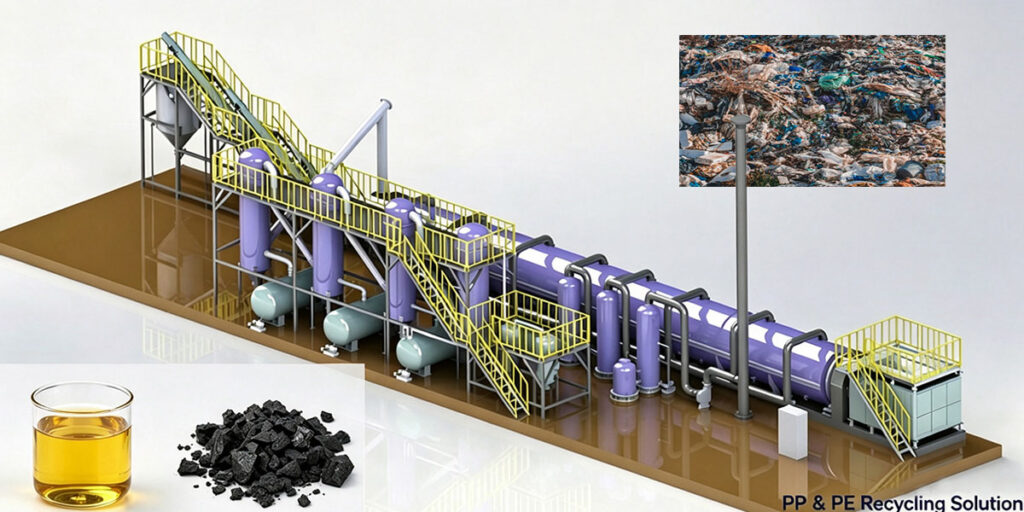
Waste management has evolved from manual and semi-automatic pyrolysis processes to fully automatic pyrolysis plants designed for large-scale production. Unlike manual or semi-continuous models, the fully automatic pyrolysis plant integrates an advanced PLC control system for continuous and automatic monitoring of various reaction parameters including temperature, pressure and oil yield rate.
All processes in the plant, including material feeding and oil product unloading, operate completely automatically. This automation enables the plant to run 24/7 and achieve a high daily production of 2000-3000L. On the other hand, a fully automatic pyrolysis plant is equipped with sealed tanks and closed structures. Therefore, the plant produces no gas leaks during operation. This allows it to fulfill safety and environmental requirements.
PP and PE are common plastics found in a large percentage of industrial waste streams. To set up an appropriate waste management system for these plastics, one must first establish a process of collection and purifying the sorted plastics. PP and PE have very high oil yields through thermal cracking making them desirable as a plastic feedstock. Storage silos and transport containers must be set up to maintain separate storage of PP/PE from other plastics like PVC and PET that can produce hazardous byproducts during pyrolysis. Separating these specific polymers from other mixed waste streams allows for consistent high quality feedstock collection and the long term health of the pyrolysis reactor and output.
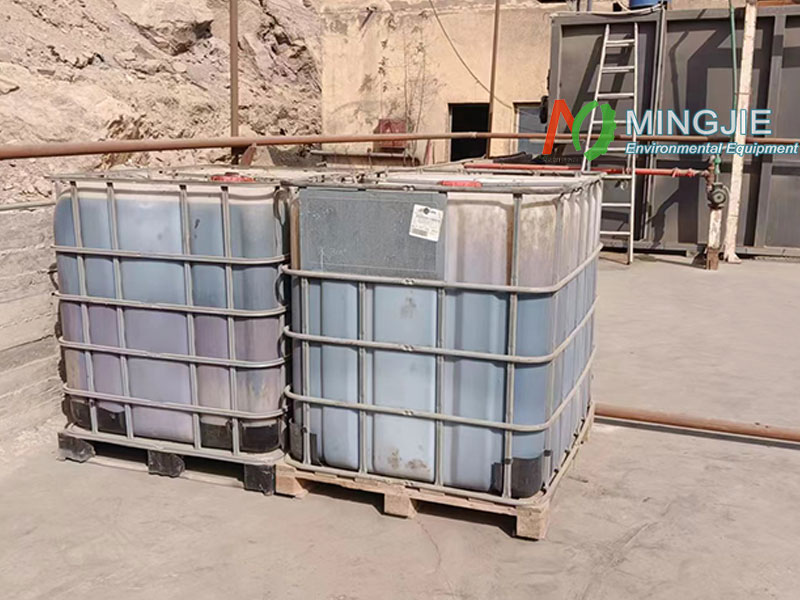
The core value of the pyrolysis process lies in its ability to transform low-value waste polymers into high-calorific fuel oil. Through the process of thermal decomposition in an oxygen-free atmosphere, long-chain polymer molecules are broken down into smaller hydrocarbon chains. This resulting oil typically possesses a high heating value, making it an excellent substitute for heavy industrial fuel or a feedstock for further refinery. The efficiency of this conversion depends heavily on the catalyst and the precision of the temperature control. This allows the product to be used in boilers, furnaces, or even diesel generators after distillation.
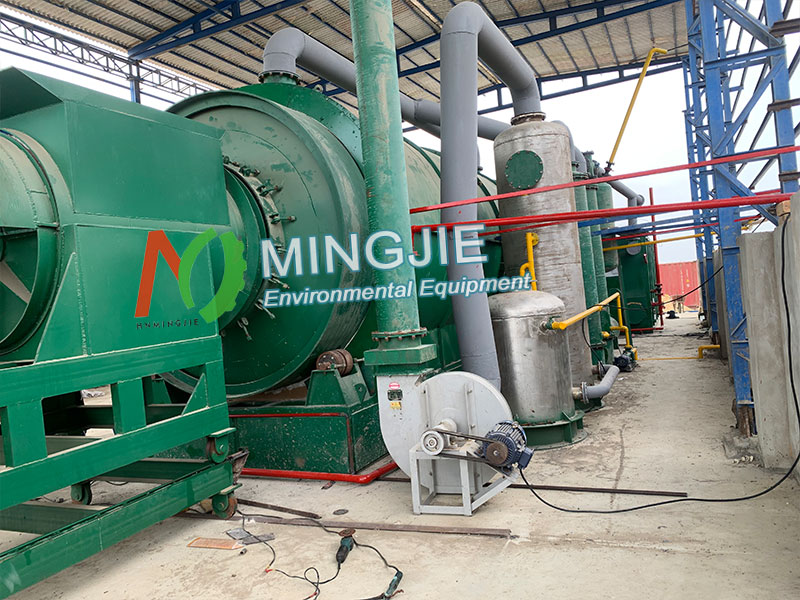
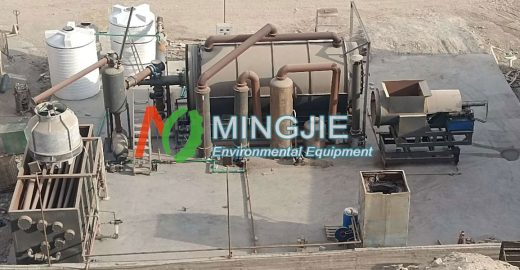
Our company has finished installing and commissioning waste plastic pyrolysis plant in Southeast Asia recently. This site for waste plastic pyrolysis plant is very large, and it is very convenient for shipping in. There is specialized and efficient plastic crushing system, with high quality automatic plastic feeding system, which can send the raw material materials into reactor without breaking vacuum. For getting high quality oil yield, we install multi-stage condenser on pyrolysis plant.
The Southeast Asian project has been running smoothly and efficiently since commissioning. It has maintained a continuous running operational cycle, processing more than 20 tonnes of waste plastic on a daily basis. The cooling system, which comprises a series of tanks in multiple stages, effectively performs the needed operations to achieve a high oil conversion rate and reduce the residual content. The reaction process produces non-condensable gases, and we reuse these gases as fuel to generate heat in the reactor. This means the plant has no need for external energy supply. Moreover, the exhaust gas treatment system has demonstrated excellent performance in removing pollutants and fully complies with local environmental standards. Therefore, the facility operates in an environmentally friendly manner, and our neighbours in the industrial park well receive it.
The waste plastic pyrolysis plant investment return is mainly from pyrolysis oil, carbon black and waste recycling service charge. With the increasing prices of traditional energy resources, the high-calorific pyrolysis oil is very competitive in local market for diesel power generator fuel. The initial investment for the project can get back quickly due to very low operation costs which mainly depend on automated pyrolysis working process and self-generated combustible gas. Most of government policies are in favor of renewable energy and waste recycling projects. As a result, the payback period for such projects can be reduced to only a few years to make profit soon.
Compared to other plastic types, PP and PE have a pure alkane structure, free of benzene rings, chlorine atoms, and heteroatoms. This gives them unique technical characteristics: no dioxins are produced during pyrolysis, the products have extremely low sulfur and nitrogen content, and extremely high resource utilization. Industrial test data shows that the oil yield from the pyrolysis of pure waste PP and PE can reach 85%–90%, and the comprehensive resource utilization rate of oil, gas, and carbon black exceeds 96%, far higher than that of mixed plastic pyrolysis systems.
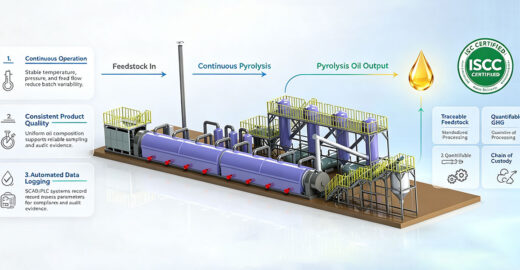
Continuous pyrolysis plant is the foundation for ISCC certification of pyrolysis oil. It upgrades pyrolysis oil production from an unpredictable batch process to a quantifiable,…
The amount of plastic waste generated globally has far exceeded the capacity of mechanical recycling. Plastic pyrolysis technology offers advantages such as broad adaptability to…